DestinosDestinations · CroaciaCroatia · Capital de estado/provinciaState/provincial capital
Split
Aprox. 176,314 habitantesApprox. 176,314 people
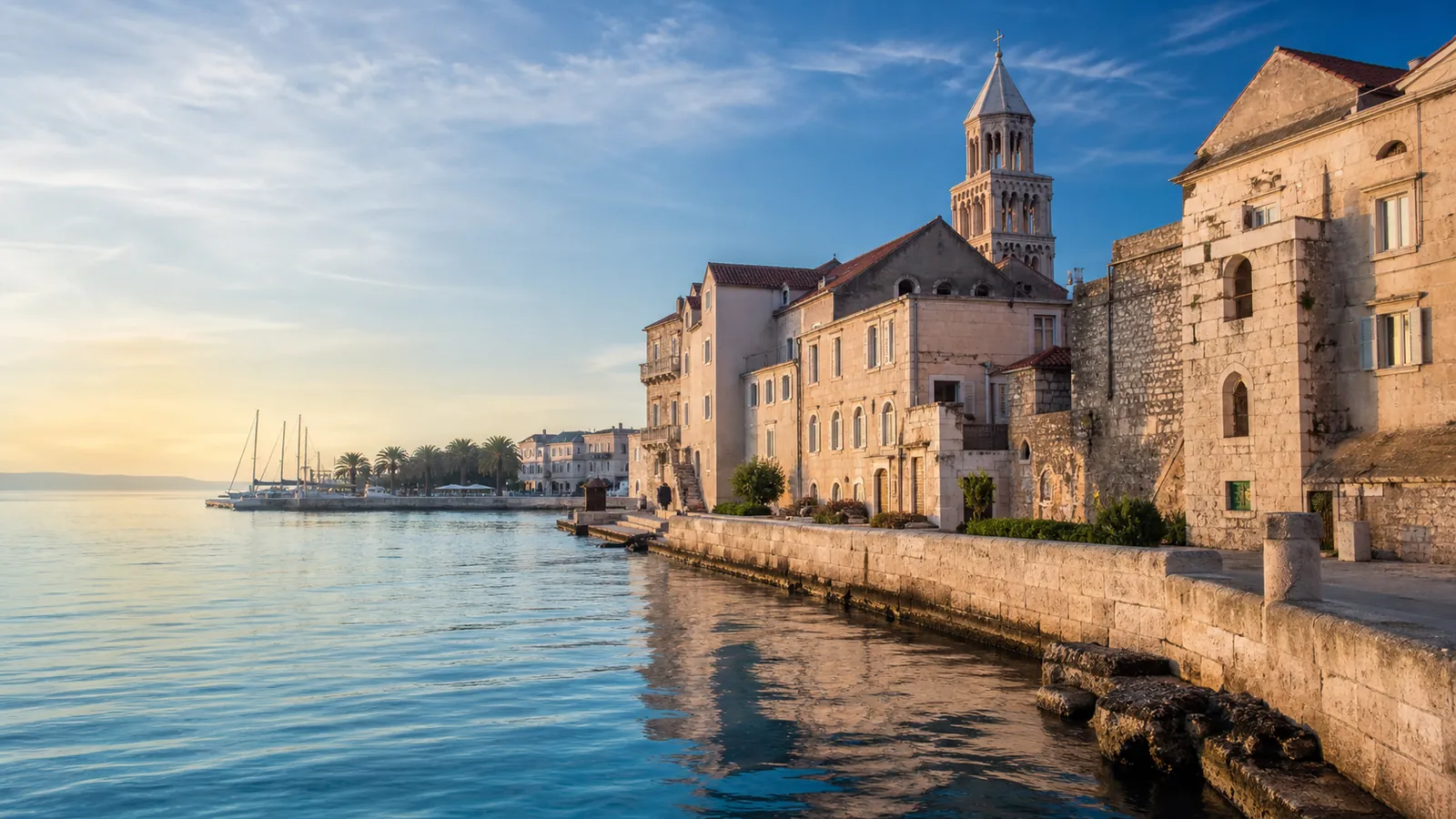
Split es la Dalmacia que sueñas: una ciudad viva construida DENTRO de un palacio romano de 1,700 años, junto a un mar Adriático imposiblemente azul. Piedra blanca, palmeras, pescado fresco y ferrys a islas de postal. Se llena en verano, pero fuera de temporada es un secreto barato y luminoso del Mediterráneo.Split is the Dalmatia you dream of: a living city built INSIDE a 1,700-year-old Roman palace, beside an impossibly blue Adriatic. White stone, palm trees, fresh fish and ferries to postcard islands. It packs out in summer, but off-season it's a cheap, luminous Mediterranean secret.
Mejor épocaBest time
Mayo–junio y septiembre. Julio–agosto es precioso pero lleno y caro.May–June and September. July–August is gorgeous but packed and pricey.
PresupuestoBudget
Nómada cómodo ~$1,200–1,800 USD/mes; barato fuera de temporada.Comfortable nomad ~$1,200–1,800 USD/mo; cheap off-season.
EntradaEntry
Schengen: 90 días sin visa para la mayoría (Croacia ya es Schengen).Schengen: 90 days visa-free for most (Croatia is now Schengen).
ConectividadConnectivity
Fibra buena; comunidad nómada creciente y la mejor puerta a las islas.Good fiber; a growing nomad community and the best gateway to the islands.
ViajarTravel
Qué ver y reservar en SplitWhat to see and book in Split
El Palacio
Callejear entre columnas romanas, bares y ropa tendida.Wandering among Roman columns, bars and hanging laundry.
Las islas
Ferry a Hvar, Brač o Vis: playas de guijarro y agua turquesa.Ferry to Hvar, Brač or Vis: pebble beaches and turquoise water.
El Riva
El malecón de palmeras para el paseo del atardecer.The palm-lined promenade for the sunset stroll.
Arma tu viajePlan your trip
¿Cuántos días te vas a Split?How many days in Split?
Dónde dormirWhere to stay
Hotel y estanciaHotel & stay
Hoteles en SplitHotels in Split
Booking
Estancias largas / departamentosLong stays / apartments
Booking
Reserva con cancelación gratis y paga al llegar.Book with free cancellation and pay on arrival.
Qué hacerWhat to do
Tours y experienciasTours & experiences
Tours en SplitTours in Split
GetYourGuide
Paquetes de varios díasMulti-day packages
TourRadar
Los tours y paquetes de varios días también son afiliados.Tours and multi-day packages are affiliate too.
eSIM
Datos al aterrizarData on landing
eSIM para CroaciaeSIM for Croatia
Airalo
Se activa antes de salir; nada de buscar SIM en el aeropuerto.Activates before you leave; no airport SIM hunting.
SeguroInsurance
Elige según tu viajePick by trip type
SafetyWing
Larga estancia / nómadaLong stay / nomad
Heymondo
Viaje corto / turistaShort trip / tourist
IATI
En español / aventuraSpanish / adventure
Cobertura médica y de cancelación; barato y tranquiliza. Cada uno encaja con un viajero distinto.Medical and cancellation cover; cheap peace of mind. Each fits a different traveler.
VivirLive there
¿Y si te quedas una temporada?What if you stay a while?
Costo de vida nómadaNomad cost of living
¿Cuánto necesitas al mes en Split?How much do you need per month in Split?
Split funciona si quieres mar, una ciudad chica y caminable, y no te molesta organizar tu año alrededor de la temporada: de octubre a mayo consigues un departamento decente por bastante menos, la ciudad es tuya y trabajas con el Adriático enfrente. No funciona si buscas ganga permanente ni una escena nómada grande todo el año: en verano el mismo departamento se renta al doble o al triple, llegan los cruceros y muchos contratos de invierno te sacan en mayo. Y ya no es la Croacia barata de hace diez años: desde el euro (2023) el súper y los restaurantes están bastante cerca de nivel Europa occidental. Los presupuestos de abajo son de temporada baja; en verano no aplican.Split works if you want the sea, a small walkable city, and you don't mind planning your year around the season: from October to May you get a decent apartment for a lot less, the city is basically yours, and you work with the Adriatic in front of you. It doesn't work if you want a permanent bargain or a big year-round nomad scene: in summer the same apartment rents for two or three times as much, the cruise ships arrive, and a lot of winter leases push you out in May. And this isn't the cheap Croatia of ten years ago: since the euro (2023) groceries and restaurants sit fairly close to Western European levels. The budgets below are off-season numbers; they don't hold in summer.
Austero al mesLean per month
≈US$1.300
Estudio o compartido, cocinas en casa, transporte público.Studio or shared, you cook at home, public transport.
Cómodo al mesComfortable per month
≈US$2.400
Departamento propio en buena zona, comes fuera, coworking.Your own place in a good area, eating out, coworking.
En qué se te vaWhere the money goes
- Renta de 1 recámara amueblada en zona céntrica, contrato de invierno (oct–may, mensual)Furnished 1-bedroom in a central area, winter lease (Oct–May, monthly)≈US$700–950
- Renta de 1 recámara fuera del centro (Split 3, Žnjan) en contrato de invierno (mensual)1-bedroom outside the center (Split 3, Žnjan) on a winter lease (monthly)≈US$500–700
- El MISMO departamento en verano (jun–sep), alquiler corto: multiplica por 2–3 y sube más en agostoThe SAME apartment in summer (Jun–Sep), short-term: 2–3x the winter price, and more in August≈US$1.800–3.000+
- Servicios: luz, agua y gastos comunes — el extremo alto es invierno con calefacción eléctricaUtilities: power, water, building fees — the high end is winter with electric heating≈US$90–200
- Internet de fibra en casa, 100–500 Mbps (mensual)Home fiber internet, 100–500 Mbps (monthly)≈US$28–40
- Coworking, escritorio flexible (mensual); día suelto ≈US$15–20Coworking hot desk (monthly); day pass ≈US$15–20≈US$130–190
- Marenda / menú del día en konoba local (por comida)Marenda / set lunch at a local konoba (per meal)≈US$9–14
- Cena en restaurante medio con una copa de vino (por persona) — dentro del palacio, el dobleDinner at a mid-range restaurant with a glass of wine (per person) — double that inside the palace≈US$25–35
- Abono mensual de autobús urbano (Promet Split); SIM prepago con datos ≈US$15–25Monthly city bus pass (Promet Split); prepaid data SIM ≈US$15–25≈US$30–50
Internet y señalInternet & signal
Croacia tiene buena infraestructura y Split no es la excepción: fibra de Hrvatski Telekom, A1 y Telemach en la mayoría de los edificios de la ciudad nueva, con planes típicos de 100 a 500 Mbps por ≈US$28–40 al mes y subida decente. No hay apagones ni cortes crónicos, ni censura ni necesidad de VPN. El 4G es sólido en toda la ciudad y hay 5G en buena parte; una SIM prepago con datos cuesta ≈US$15–25 al mes y trae roaming de la UE incluido, así que te sirve igual en Italia o España. Dos avisos honestos: en el casco viejo y en las casas de piedra de Varoš muchas veces solo hay DSL o el wifi compartido del casero detrás de muros de medio metro — pide una prueba de velocidad y mira la SUBIDA antes de firmar; y en julio–agosto la red móvil se satura en la Riva y en Bačvice con la avalancha turística.Croatia has solid infrastructure and Split is no exception: fiber from Hrvatski Telekom, A1 and Telemach in most buildings in the newer parts of town, with typical 100–500 Mbps plans at ≈US$28–40 a month and decent upload. No blackouts, no chronic outages, no censorship, no VPN needed. 4G is strong citywide and 5G covers much of it; a prepaid data SIM runs ≈US$15–25 a month with EU roaming included, so it still works in Italy or Spain. Two honest warnings: in the old town and the stone houses of Varoš you'll often find only DSL or the landlord's shared wifi behind half-meter walls — ask for a speed test and check the UPLOAD before signing; and in July–August the mobile network gets congested on the Riva and at Bačvice with the tourist wave.
CoworkingCoworking
Escena pequeña pero real y muy conectada — todo el mundo se conoce. El nombre que sí te consta es Saltwater, el coworking y comunidad nómada con base en Split que lleva años armando el ambiente local y los eventos; más allá de eso hay un puñado de espacios independientes y oficinas compartidas entre el centro y Split 3, que abren y cierran seguido, así que confirma cuáles siguen vivos antes de llegar. Un escritorio flexible mensual sale ≈US$130–190 y el día suelto ≈US$15–20. Ojo con una cosa cultural: en Dalmacia el café es para sentarse a platicar horas, no para trabajar — un espresso en barra cuesta ≈US$2–3, pero sacar la laptop en una terraza llena en verano se ve raro y te van a mirar feo. En invierno los coworkings tienen sitio de sobra; en verano se llenan de gente que huye del calor y del ruido.Small but real scene, and tightly connected — everyone knows everyone. The name that genuinely holds up is Saltwater, the Split-based nomad coworking and community that has been running the local scene and its events for years; beyond that there's a handful of independent spaces and shared offices between the center and Split 3, and they open and close often, so check which ones are still alive before you land. A monthly hot desk runs ≈US$130–190, a day pass ≈US$15–20. One cultural note: in Dalmatia a café is for sitting and talking for hours, not for working — an espresso at the bar is ≈US$2–3, but opening a laptop on a packed summer terrace reads as odd and you'll get looks. In winter coworkings have plenty of room; in summer they fill with people escaping the heat and the noise.
Dónde vive la gente nómadaWhere nomads actually live
Bačvice y Firule: la zona favorita de los extranjeros — la playa de arena (donde se juega picigin), 10–15 min caminando al centro, cafés y gimnasios; el precio es el ruido de los bares de playa hasta tarde en verano. Spinut y Meje, del lado del parque Marjan: lo más tranquilo y bonito, pinos, mar y senderos para correr; Meje es zona de casas y sale caro, Spinut es más normal y muy vivible. Split 3 (Kman, Sukoišan): bloques residenciales de los 70, vida local de verdad, supermercados y mercado, la mejor relación precio/metro y buenos autobuses — feo por fuera, cómodo por dentro. Žnjan, al este: edificios más nuevos, más espacio por tu dinero y playa al lado, pero son 30–40 min a pie al centro o bus. Del casco viejo y Varoš: preciosos y una trampa para vivir — caros, casi todo es alquiler turístico, cero estacionamiento y ruido de maletas rodando y fiesta debajo de tu ventana.Bačvice and Firule: the foreigners' favorite — the sandy beach (home of picigin), 10–15 minutes' walk to the center, cafés and gyms; the price is beach-bar noise running late in summer. Spinut and Meje, on the Marjan park side: the quietest and prettiest, pines, sea and running trails; Meje is villa territory and pricey, Spinut is more normal and very livable. Split 3 (Kman, Sukoišan): 1970s residential blocks, real local life, supermarkets and the market, the best value per square meter and good bus links — ugly outside, comfortable inside. Žnjan, to the east: newer buildings, more space for your money and a beach next door, but it's a 30–40 minute walk to the center or a bus ride. The old town and Varoš: gorgeous, and a trap to actually live in — expensive, almost all short-term rentals, zero parking, and the sound of rolling suitcases and partying under your window.
ComunidadCommunity
Comunidad nómada chica pero muy fácil de entrar: al ser poca gente, en dos semanas ya conoces a media escena si vas a los eventos del coworking y a los grupos de nómadas de Croacia y de Split en Facebook. El inglés es excelente en toda la ciudad, sobre todo en gente menor de 50, así que no necesitas croata para funcionar (aunque "dobar dan", "hvala" y "molim" te abren puertas). La comunidad hispanohablante es muy pequeña — vas a socializar en inglés, con muchos alemanes, holandeses, británicos y estadounidenses. Con los croatas la relación es amable pero de amistad lenta: tienen sus grupos de toda la vida, y se entra por deporte — nadar, correr en Marjan, remo, vela, básquet, futbol o Hajduk. El detalle que nadie te dice: el ritmo social va al revés que en otras ciudades. En verano la ciudad está llenísima pero de turistas de paso, y de noviembre a marzo se vacía tanto que si no armaste tu círculo antes, el invierno se siente solo.Small nomad community, but very easy to break into: because there are so few of you, two weeks of coworking events and the Croatia/Split nomad Facebook groups and you already know half the scene. English is excellent across the city, especially with anyone under 50, so you don't need Croatian to function (though "dobar dan", "hvala" and "molim" open doors). The Spanish-speaking community is tiny — you'll socialize in English, alongside a lot of Germans, Dutch, Brits and Americans. With Croatians it's warm but slow-burn friendship: they have lifelong circles, and the way in is sport — swimming, running on Marjan, rowing, sailing, basketball, football or Hajduk. The thing nobody tells you: the social rhythm runs backwards from other cities. In summer the place is packed but with tourists passing through, and from November to March it empties out so much that if you haven't built your circle beforehand, winter feels lonely.
Lo que nadie te diceWhat nobody tells you
Lo grande es la estacionalidad, y te va a definir el año: muchísimos caseros solo rentan de octubre a mayo porque en verano ganan mucho más con turistas, así que puedes firmar en noviembre y quedarte en la calle en mayo. Pregunta la fecha de salida ANTES de enamorarte del departamento y ten resuelto dónde vas a estar en verano. Segundo, el papeleo: Croacia entró a Schengen en enero de 2023, así que tus 90 días de turista salen del mismo bote que el resto de Schengen — ya no sirve para "resetear" días. Existe el permiso croata de nómada digital (hasta 12 meses, no se encadena: hay que esperar un tiempo antes de volver a pedirlo) y trae exención del impuesto croata sobre ingresos de fuera, pero el mínimo de ingresos se actualiza cada año y te piden comprobante de alojamiento; confirma la cifra vigente y los requisitos con el consulado o la policía de extranjería antes de contar con ello. Tercero, el clima: el invierno no es frío pero sí húmedo y ventoso — la bura pega seca y helada, el jugo trae días de lluvia y humedad pegajosa —, las casas están mal aisladas y calentar con luz te puede duplicar el recibo; revisa que haya bomba de calor (aire acondicionado con calor) y busca manchas de humedad en las paredes. Y el ruido: julio y agosto son otra ciudad, con cruceros, despedidas de soltero y el festival Ultra en el estadio; si eres sensible al ruido, no vivas en el palacio ni sobre la Riva. Split es muy segura — el riesgo real es turista borracho, carteristas en verano y algún día de partido del Hajduk — pero desde el euro los precios subieron de forma visible: compra en Lidl, Kaufland o Tommy en vez de las tienditas del centro, y no comas dentro del palacio de Diocleciano si no quieres pagar el doble.The big one is seasonality, and it will define your year: a huge share of landlords only rent October to May because summer tourists pay far more, so you can sign in November and be out on the street in May. Ask the move-out date BEFORE you fall in love with the apartment, and know where you'll be in summer. Second, the paperwork: Croatia joined Schengen in January 2023, so your 90 tourist days come out of the same Schengen pot — it no longer works as a "reset". There is a Croatian digital nomad permit (up to 12 months, not back-to-back: you have to wait before reapplying) and it exempts you from Croatian tax on foreign income, but the income minimum is updated yearly and they ask for proof of accommodation; confirm the current figure and requirements with the consulate or the immigration police before you count on it. Third, the weather: winter isn't cold but it is damp and windy — the bura hits dry and freezing, the jugo brings rainy, clammy days — buildings are poorly insulated, and heating with electricity can double your bill; check for a heat pump (AC that heats) and look for damp stains on the walls. And the noise: July and August are a different city, with cruise ships, stag parties and the Ultra festival at the stadium; if noise gets to you, don't live inside the palace or above the Riva. Split is very safe — the real risks are drunk tourists, summer pickpockets and the odd Hajduk match day — but prices rose visibly after the euro: shop at Lidl, Kaufland or Tommy instead of the little stores downtown, and don't eat inside Diocletian's Palace unless you want to pay double.
Cifras en dólares y aproximadas, revisadas en septiembre de 2026, para una persona sola. Los precios de renta se mueven rápido en las ciudades con muchos nómadas — úsalas para comparar y presupuestar, no como cotización.Figures in US dollars and approximate, reviewed in September 2026, for one person. Rents move fast in nomad-heavy cities — use these to compare and budget, not as a quote.
Dónde poner tu base en Split, por barrio:Where to base yourself in Split, by neighborhood:
Palacio de Diocleciano
Vivir literalmente dentro de las ruinas romanas.Living literally inside the Roman ruins.
Varoš
El barrio de casas de piedra en la ladera, tranquilo.The hillside quarter of stone houses, calm.
Bačvice
Junto a la playa urbana, más nuevo y animado.By the urban beach, newer and lively.
Para quedarteTo settle in
Dinero y conexiónMoney & connection
Wise
Cuenta y tarjeta multidivisaMulti-currency account & card
VPN
Wifi público y geobloqueoPublic wifi & geoblocking
SafetyWing
Seguro de larga estanciaLong-stay insurance
Lo básico si te quedas meses: cuenta multidivisa, VPN y seguro de larga estancia.The basics if you stay months: multi-currency account, VPN and long-stay insurance.
RequisitosRequirements
¿Qué necesitas para entrar?What do you need to enter?
Requisitos de entradaEntry requirements
¿Necesitas visa?Do you need a visa?
Cargando…Loading…
¿Vas por más que turismo? Vías para Croacia:Going for more than tourism? Routes for Croatia:
Requisitos, tiempos, costo y fuente oficial de cada una.Requirements, timelines, cost and official source for each.
Referencia orientativa; las reglas cambian. Confirma siempre con la embajada o tu aerolínea antes de viajar.Guidance only; rules change. Always confirm with the embassy or your airline before traveling.
- Pasaporte: vigente al menos 6 meses después de tu viaje.Passport: valid at least 6 months beyond your trip.
- Visa: depende de tu nacionalidad y del tiempo de estancia. Revisa el caso de Croacia en la página de requisitos.Visa: depends on your nationality and length of stay. Check the Croatia case on the requirements page.
- Seguro: algunos países lo piden en frontera; te dejamos uno arriba.Insurance: some countries require it at the border; there's one above.
Algunos enlaces son de afiliado: si reservas por ellos, ganamos una comisión sin costo extra para ti. Solo recomendamos lo que usaríamos.Some links are affiliate links: if you book through them we earn a commission at no extra cost to you. We only recommend what we'd use.
Más en CroaciaMore in Croatia
Zagreb
Capital del paísNational capital
Rijeka
Capital de estado/provinciaState/provincial capital
Osijek
Capital de estado/provinciaState/provincial capital
Zadar
Capital de estado/provinciaState/provincial capital
Slavonski Brod
Capital de estado/provinciaState/provincial capital
Pula
CiudadCity