DestinosDestinations · ItaliaItaly · Capital del paísNational capital
Roma
Aprox. 2,318,895 habitantesApprox. 2,318,895 people
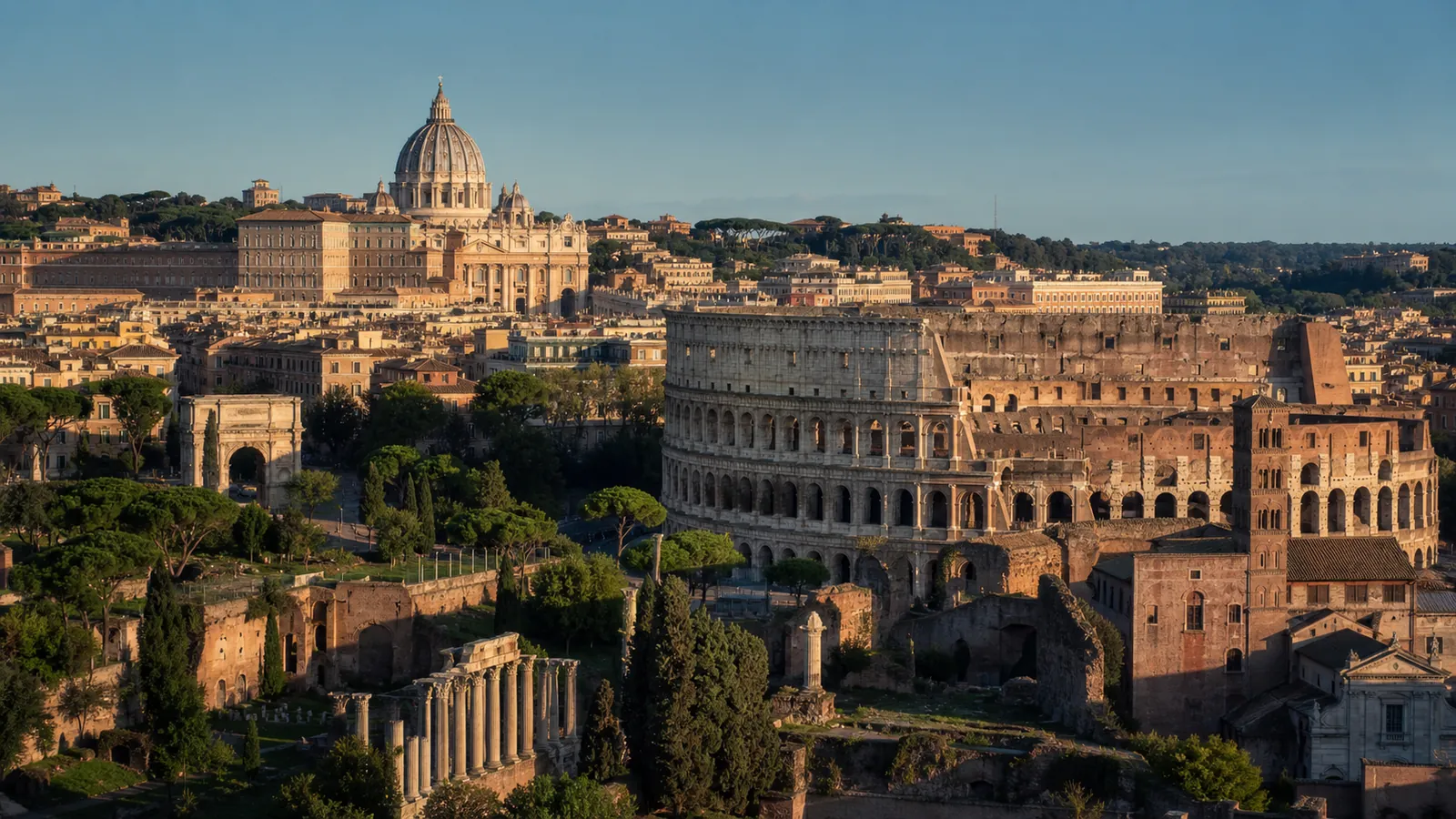
Roma es un museo a cielo abierto donde la gente vive encima de 2,700 años de historia sin inmutarse. Caótica, ruidosa y un poco rota, pero de una belleza que te para en seco a cada esquina — y donde se come de maravilla por poco dinero.Rome is an open-air museum where people live atop 2,700 years of history without blinking. Chaotic, loud and a little broken, but with a beauty that stops you cold on every corner — and where you eat wonderfully for little money.
Mejor épocaBest time
Abril–junio y septiembre–octubre. Agosto es sofocante y los romanos se van; el invierno es suave.April–June and September–October. August is stifling and Romans leave; winter is mild.
PresupuestoBudget
Nómada cómodo ~$1,600–2,300 USD/mes; la pasta y el vino de casa son casi gratis.Comfortable nomad ~$1,600–2,300 USD/mo; house pasta and wine are nearly free.
EntradaEntry
Schengen: 90 días sin visa para la mayoría.Schengen: 90 days visa-free for most.
ConectividadConnectivity
Fibra decente en el centro; el transporte es un caos, camina.Decent fiber downtown; transit is chaos, walk instead.
ViajarTravel
Qué ver y reservar en RomaWhat to see and book in Roma
Coliseo y Foro
El corazón del imperio; entra al abrir o al cerrar.The empire's heart; enter at opening or closing.
El Vaticano
San Pedro y los Museos; reserva y ve tempranísimo.St. Peter's and the Museums; book and go very early.
Comer romano
Cacio e pepe, carbonara y un gelato caminando. Repite.Cacio e pepe, carbonara and a gelato on the move. Repeat.
Arma tu viajePlan your trip
¿Cuántos días te vas a Roma?How many days in Roma?
Dónde dormirWhere to stay
Hotel y estanciaHotel & stay
Hoteles en RomaHotels in Roma
Booking
Estancias largas / departamentosLong stays / apartments
Booking
Reserva con cancelación gratis y paga al llegar.Book with free cancellation and pay on arrival.
Qué hacerWhat to do
Tours y experienciasTours & experiences
Tours en RomaTours in Roma
GetYourGuide
Paquetes de varios díasMulti-day packages
TourRadar
Los tours y paquetes de varios días también son afiliados.Tours and multi-day packages are affiliate too.
eSIM
Datos al aterrizarData on landing
eSIM para ItaliaeSIM for Italy
Airalo
Se activa antes de salir; nada de buscar SIM en el aeropuerto.Activates before you leave; no airport SIM hunting.
SeguroInsurance
Elige según tu viajePick by trip type
SafetyWing
Larga estancia / nómadaLong stay / nomad
Heymondo
Viaje corto / turistaShort trip / tourist
IATI
En español / aventuraSpanish / adventure
Cobertura médica y de cancelación; barato y tranquiliza. Cada uno encaja con un viajero distinto.Medical and cancellation cover; cheap peace of mind. Each fits a different traveler.
VivirLive there
¿Y si te quedas una temporada?What if you stay a while?
Costo de vida nómadaNomad cost of living
¿Cuánto necesitas al mes en Roma?How much do you need per month in Roma?
Roma funciona si quieres vivir en una ciudad hermosa de verdad, comer increíble por poco dinero y estar a un tren de media Europa, pagando bastante menos renta que en Milán, París o Ámsterdam. No funciona si esperas un hub nómada tipo Lisboa: la escena de coworking es chica, casi ningún café es para trabajar con laptop, el inglés se acaba apenas sales de la zona turística y la burocracia italiana es lenta de verdad. Es una base para alguien paciente, que va a aprender italiano y que valora la vida fuera de la pantalla más que la eficiencia. Ojo: aquí todo se paga en euros — las cifras en dólares son aproximadas y se mueven con el tipo de cambio.Rome works if you want to live in a genuinely beautiful city, eat extraordinarily well for little money, and sit a train ride from half of Europe while paying noticeably less rent than in Milan, Paris or Amsterdam. It does not work if you expect a Lisbon-style nomad hub: the coworking scene is small, almost no café is laptop-friendly, English runs out the moment you leave the tourist core, and Italian bureaucracy is genuinely slow. It's a base for someone patient, willing to learn Italian, who values life away from the screen more than efficiency. Note that everything here is priced in euros — the dollar figures are approximate and move with the exchange rate.
Austero al mesLean per month
≈US$1.500
Estudio o compartido, cocinas en casa, transporte público.Studio or shared, you cook at home, public transport.
Cómodo al mesComfortable per month
≈US$2.800
Departamento propio en buena zona, comes fuera, coworking.Your own place in a good area, eating out, coworking.
En qué se te vaWhere the money goes
- Renta de 1 recámara amueblada en zona nómada (Trastevere, Monti, Prati, Ostiense)Furnished 1-bedroom in a nomad area (Trastevere, Monti, Prati, Ostiense)≈€1.000–1.500/mes (≈US$1.150–1.750); lo amueblado de media estancia siempre sale más caro que un contrato largo, y en zonas muy turísticas puede pasarse de ahí
- Renta de 1 recámara fuera del centro (Marconi, Tuscolano, Garbatella, Montesacro)1-bedroom outside the center (Marconi, Tuscolano, Garbatella, Montesacro)≈€650–950/mes (≈US$750–1.100)
- Cuarto en piso compartidoRoom in a shared flat≈€450–700/mes (≈US$520–800) por habitación individual; la doble compartida baja bastante
- Servicios (luz, gas, agua, basura) + fibra en casa, una personaUtilities (electricity, gas, water, waste tax) + home fiber, one person≈€100–190/mes (≈US$115–220); el gas de la calefacción en invierno es lo que dispara la cuenta
- Coworking, escritorio flexible mensualCoworking, monthly hot desk≈€150–250/mes (≈US$170–290); pase por día ≈€15–25
- Comida de diario: pizza al taglio o un primo en tavola calda, más el espresso de barraEveryday food: pizza al taglio or a pasta dish at a tavola calda, plus an espresso at the baralmuerzo ≈€7–13 (≈US$8–15); espresso de pie ≈€1,20–1,50 y un flat white de especialidad ≈€3,50–4,50
- Cena en trattoria de barrio, por persona con vino de la casaDinner at a neighborhood trattoria, per person with house wine≈€25–35 (≈US$29–40)
- Abono mensual Metrebus Roma (metro, bus y tranvía dentro de la ciudad)Monthly Metrebus Roma pass (metro, bus and tram within the city)≈€35 (≈US$40); vale por mes calendario, no 30 días desde que lo compras, y el anual sale bastante más barato por mes
- SIM italiana con datos (Iliad, ho., Very y similares)Italian SIM with data (Iliad, ho., Very and similar)≈€7–12/mes (≈US$8–14) por 100–200 GB con 5G; se contrata en dos minutos con pasaporte y codice fiscale
Internet y señalInternet & signal
La fibra es barata y buena cuando llega: TIM, Fastweb, Vodafone, WindTre e Iliad venden planes de giga por ≈€25–35 al mes (≈US$28–40). El detalle que a nadie le cuentan: la cobertura no es pareja edificio por edificio. En inmuebles viejos del centro histórico muchas veces solo llega FTTC (fibra hasta la acera y cobre hasta tu piso), que te deja alrededor de 100–200 Mb de bajada y una subida bastante más modesta — te alcanza para videollamadas, pero no es la fibra simétrica de Lisboa. Pregunta SIEMPRE qué tecnología llega al departamento, no "si hay fibra", y pide una prueba de velocidad antes de firmar. La instalación puede tardar semanas y el precio de promoción casi siempre viene atado a quedarte 12–24 meses, con costes si cancelas antes, así que si vas por pocos meses renta un lugar con internet ya incluido. En móvil Italia es de lo más barato de Europa: ≈€7–12 al mes por 100–200 GB con Iliad, ho. o Very, con 5G sólido en casi toda la ciudad (dentro de los túneles del metro la señal es irregular según la línea). Apagones no son un tema en Roma, y tampoco hay censura ni necesidad de VPN. Lo que sí es un tema es la cultura del bar italiano: el café se toma de pie y en dos minutos, muy pocos sitios tienen wifi o enchufes, y ocupar mesa tres horas con un laptop no se estila. No planees tu vida laboral alrededor de "trabajo desde cafés": aquí no funciona como en Lisboa o Medellín.Fiber is cheap and good — when it actually reaches you. TIM, Fastweb, Vodafone, WindTre and Iliad sell gigabit plans for roughly €25–35 a month (≈US$28–40). The part nobody mentions: coverage varies building by building. In old buildings in the historic center you often only get FTTC (fiber to the street cabinet, copper into your flat), which lands you around 100–200 Mb down and noticeably less upstream — fine for video calls, but not Lisbon-style symmetric fiber. ALWAYS ask which technology reaches the apartment, not "is there fiber", and ask for a speed test before you sign. Installation can take weeks, and promo pricing is usually tied to staying 12–24 months with early-termination fees, so for a short stay rent somewhere that already includes internet. Mobile is among the cheapest in Europe: ≈€7–12 a month for 100–200 GB with Iliad, ho. or Very, with solid 5G across most of the city (signal inside metro tunnels is patchy depending on the line). Blackouts aren't a thing in Rome, and there's no censorship or VPN issue. What is a thing: Italian bar culture — coffee is drunk standing up in two minutes, very few places have wifi or power outlets, and camping at a table for three hours with a laptop isn't done. Don't build your work life around "I'll work from cafés": it doesn't work here the way it does in Lisbon or Medellín.
CoworkingCoworking
La escena existe pero es chica para el tamaño de la ciudad y bastante menos internacional que en Lisboa o Barcelona: el público es sobre todo freelance italiano, startups y consultoras, no nómadas de paso. Los nombres más conocidos son Talent Garden en Ostiense e Impact Hub Roma — confirma que sigan abiertos y en la misma sede antes de planear alrededor de ellos, porque en Roma los espacios abren y cierran más de lo que uno esperaría. Además están las cadenas grandes de oficina flexible (Regus y Spaces, ambas de IWG) en zonas de negocios, caras y sin comunidad, y varios coworkings chicos de barrio en Ostiense, Garbatella, Pigneto y San Lorenzo. La mensualidad de escritorio flexible ronda los ≈€150–250 (≈US$170–290) y el escritorio fijo u oficina privada sube de ahí. Casi todos venden pase por día (≈€15–25): úsalos antes de comprometerte, porque el ambiente cambia muchísimo entre espacios. Dos avisos prácticos: muchos son horario de oficina de lunes a viernes, así que no des por hecho el acceso 24/7, y en agosto buena parte de Roma cierra o va a media máquina, coworkings incluidos.The scene exists but is small for a city this size and far less international than Lisbon or Barcelona: the crowd is mostly Italian freelancers, startups and consultants, not passing nomads. The best-known names are Talent Garden in Ostiense and Impact Hub Roma — check they're still open and still in the same building before you plan around them, because spaces in Rome open and close more than you'd expect. On top of that you have the big flexible-office chains (Regus and Spaces, both IWG) in business districts — expensive and community-free — plus small neighborhood coworkings in Ostiense, Garbatella, Pigneto and San Lorenzo. A hot desk runs ≈€150–250 a month (≈US$170–290); dedicated desks and private offices climb from there. Most sell day passes around €15–25: use them before committing, because the vibe varies enormously between spaces. Two practical warnings: many run office hours Monday to Friday, so don't assume 24/7 access, and in August a big chunk of Rome shuts down or runs at half speed, coworkings included.
Dónde vive la gente nómadaWhere nomads actually live
Ostiense y Garbatella son la mejor apuesta si vienes a trabajar: ex-zona industrial reconvertida, metro B, el mayor grupo de coworkings de la ciudad, precios más humanos y —en Garbatella— vida de barrio de verdad, con plazas, mercado y casi nada de turistas. Prati es la opción "ciudad que funciona": ordenada, residencial, muy segura, buenos servicios y metro A; cara pero tranquila, ideal si te importa dormir bien y tener supermercado y lavandería cerca. Trastevere y Monti son los que todo el mundo quiere: preciosos, caminables y llenos de cafés, pero también los más caros por metro cuadrado y ruidosos hasta tarde — Trastevere en fin de semana es fiesta abierta bajo tu ventana. Pigneto y San Lorenzo son la zona joven y alternativa, con los mejores bares y rentas más accesibles cerca del centro; San Lorenzo es universitario, ruidoso y muy grafiteado, y Pigneto está aburguesado pero sigue siendo alcanzable (y ya tiene estación de la línea C). Y si quieres precio-vida sin renunciar al metro, mira San Giovanni, Re di Roma y Appio: residencial, romano de a de veras, y estás en el centro en diez minutos por la línea A. Bonito de visitar pero difícil de vivir: el centro histórico entre el Panteón y Piazza Navona (carísimo, ruidoso, casi sin supermercados) y toda la zona pegada a Termini.Ostiense and Garbatella are the best bet if you're here to work: a converted industrial zone on metro line B, the liveliest coworking cluster in the city, more reasonable prices and — in Garbatella — real neighborhood life, with squares, a market and almost no tourists. Prati is the "city that works" option: orderly, residential, very safe, well served and on metro A; expensive but calm, ideal if you care about sleeping well and having a supermarket and a laundromat nearby. Trastevere and Monti are the ones everyone wants: gorgeous, walkable and full of cafés, but also the priciest per square meter and loud until late — Trastevere on a weekend is an open-air party under your window. Pigneto and San Lorenzo are the young, alternative side, with the best bars and more affordable rents near the center; San Lorenzo is a student area, noisy and heavily graffitied, while Pigneto has gentrified but is still reachable (and now has a metro C station). And if you want value without giving up the metro, look at San Giovanni, Re di Roma and Appio: residential, properly Roman, and ten minutes from the center on line A. Lovely to visit, hard to live in: the historic core between the Pantheon and Piazza Navona (extremely expensive, noisy, barely any supermarkets) and the whole area right around Termini.
ComunidadCommunity
Roma tiene muchísimos extranjeros, pero no del tipo nómada: estudiantes de intercambio, gente de embajadas y de las agencias de la ONU para la alimentación (aquí tienen sede la FAO, el PMA y el FIDA), religiosos de medio mundo, y comunidades grandes y establecidas desde hace décadas —rumana, filipina y bangladesí sobre todo, y más chicas peruana, ecuatoriana y colombiana—. Eso significa que conocer gente es fácil, pero conocer gente que trabaja en remoto como tú es más difícil que en Lisboa o Barcelona: hay meetups y eventos de coworking, intercambios de idiomas y grupos tipo InterNations, solo que menos y más dispersos. El idioma es el punto clave: en la zona turística y con gente joven te salvas con inglés, pero el día a día real —el portero, el médico, el banco, la inmobiliaria, la Questura— es en italiano y no hay atajo. Si hablas español lo lees casi todo y aprendes rápido, pero el italiano hablado va a otra velocidad; empieza a estudiarlo el primer mes o vas a vivir en burbuja. Los romanos son cálidos y conversadores de entrada, aunque sus círculos suelen venir desde la escuela: entrar de verdad toma meses, no semanas.Rome has plenty of foreigners, just not the nomad kind: exchange students, embassy staff and people from the UN food agencies (FAO, WFP and IFAD are all headquartered here), clergy from all over the world, and large long-established communities — Romanian, Filipino and Bangladeshi above all, with smaller Peruvian, Ecuadorian and Colombian ones. So meeting people is easy, but meeting people who work remotely like you is harder than in Lisbon or Barcelona: there are meetups, coworking events, language exchanges and InterNations-style groups, just fewer and more scattered. Language is the crux: in the tourist core and with younger people English gets you by, but real daily life — the building super, the doctor, the bank, the letting agent, the Questura — happens in Italian, and there's no shortcut. If you speak Spanish you'll read almost everything and pick it up fast, but spoken Italian moves at another speed; start studying in month one or you'll live in a bubble. Romans are warm and chatty from the first minute, though their circles often date back to school: really getting in takes months, not weeks.
Lo que nadie te diceWhat nobody tells you
Lo primero, la burocracia: sin codice fiscale (gratis, en la Agenzia delle Entrate) no rentas, no abres cuenta bancaria ni contratas fibra. Todo va con cita, en italiano y despacio; resérvate días enteros para trámites. Vivienda: el mercado es doble. El contrato largo (4+4 o 3+2) casi siempre te pide garante o nómina italiana; lo que en la práctica te van a ofrecer es amueblado de media estancia a precio inflado, con depósito de dos o tres meses y comisión de agencia que suele salir en torno a una mensualidad. Cuidado con lo que se alquila "en negro", sin contrato registrado: sale más barato, pero te deja sin poder empadronarte y sin ninguna protección legal. La presión de los alquileres turísticos —más fuerte desde el Jubileo de 2025— apretó todavía más la oferta. Calefacción: en Roma es normal el sistema centralizado del edificio, que por normativa solo funciona en temporada de invierno (grosso modo de noviembre a mediados de abril) y con horas limitadas al día; pregunta siempre cómo se calienta el lugar y si tiene aire acondicionado, porque julio y agosto pasan de 35 °C con frecuencia y muchos departamentos no lo tienen. En agosto, además, buena parte de la ciudad cierra por vacaciones y alrededor del 15 (Ferragosto) Roma queda medio muerta. Transporte: solo tres líneas de metro para una ciudad enorme, autobuses impredecibles y huelgas (scioperi) frecuentes —se anuncian con días de antelación, revísalo—; Uber aquí es solo el servicio caro tipo Black, así que te moverás con taxi oficial o apps locales. Seguridad: la violencia es rara y puedes caminar de noche en casi todos lados, pero el carterismo es de nivel profesional en Termini, en la línea A del metro y en los buses que van al Vaticano. Súmale ruido, adoquines que destrozan maletas y bicicletas, y una gestión de basura que en varios barrios es un desastre crónico. Papeles: como turista te aplica el 90/180 de Schengen y no se estira. Italia tiene visado de nómada digital desde 2024 para perfiles cualificados, con requisitos de ingreso mínimo, seguro médico, experiencia previa en remoto y alojamiento — los montos y la documentación exacta varían y cada consulado los interpreta a su manera, así que confírmalo directamente con el consulado que te toca. Ya en Italia tienes que pedir el permesso di soggiorno dentro de los ocho días hábiles siguientes, y la cita en la Questura de Roma es el cuello de botella real. Y si te mudas contando con el descuento fiscal para "impatriati", habla antes con un commercialista: el régimen se endureció para quienes trasladan la residencia desde 2024 y no es lo que leíste en blogs viejos.First, the bureaucracy: without a codice fiscale (free, from the Agenzia delle Entrate) you can't rent, open a bank account or sign up for internet. Everything runs by appointment, in Italian, slowly; budget whole days for paperwork. Housing: the market is split in two. Long leases (4+4 or 3+2) almost always require a guarantor or an Italian payslip; what you'll actually be offered is furnished mid-stay at inflated prices, with a two-to-three month deposit and an agency fee that typically works out to around a month's rent. Be careful with places rented "in nero", with no registered contract: it's cheaper, but leaves you unable to register residency and with no legal protection. Pressure from short-term tourist rentals — heavier since the 2025 Jubilee — has squeezed supply further. Heating: Rome commonly uses building-wide central heating, which by regulation only runs during the winter season (roughly November to mid-April) and for a limited number of hours a day; always ask how a place is heated and whether it has air conditioning, because July and August regularly run 35 °C and up and plenty of flats don't have it. In August a big share of the city also shuts for holidays, and around the 15th (Ferragosto) Rome is close to dead. Transport: only three metro lines for a huge city, unpredictable buses and frequent strikes (scioperi) — they're announced days ahead, so check; Uber here is only the expensive Black-style service, so you'll rely on official taxis or local apps. Safety: violent crime is rare and you can walk at night almost anywhere, but pickpocketing is professional-grade at Termini, on metro line A and on the buses toward the Vatican. Add noise, cobblestones that destroy suitcases and bikes, and waste collection that's a chronic mess in several neighborhoods. Paperwork: as a tourist you're bound by Schengen's 90/180 rule and it doesn't stretch. Italy has had a digital nomad visa since 2024 for qualified profiles, with minimum income, health insurance, prior remote-work experience and accommodation requirements — the exact amounts and documents vary and each consulate reads them its own way, so confirm directly with the consulate that covers you. Once in Italy you have to apply for the permesso di soggiorno within eight working days, and the appointment at Rome's Questura is the real bottleneck. And if you're moving counting on the "impatriati" tax break, talk to a commercialista first: the regime was tightened for people moving from 2024 onward and is not what old blog posts describe.
Cifras en dólares y aproximadas, revisadas en septiembre de 2026, para una persona sola. Los precios de renta se mueven rápido en las ciudades con muchos nómadas — úsalas para comparar y presupuestar, no como cotización.Figures in US dollars and approximate, reviewed in September 2026, for one person. Rents move fast in nomad-heavy cities — use these to compare and budget, not as a quote.
Dónde poner tu base en Roma, por barrio:Where to base yourself in Roma, by neighborhood:
Trastevere
Empedrado, bohemio y de noche larga; el más encantador.Cobblestoned, bohemian and late-night; the most charming.
Monti
Escondido junto al Coliseo, local y de moda a la vez.Tucked by the Colosseum, local and trendy at once.
Centro Storico
Vivir entre el Panteón y Trevi: caro, pero es Roma pura.Living between the Pantheon and Trevi: pricey, but pure Rome.
Para quedarteTo settle in
Dinero y conexiónMoney & connection
Wise
Cuenta y tarjeta multidivisaMulti-currency account & card
VPN
Wifi público y geobloqueoPublic wifi & geoblocking
SafetyWing
Seguro de larga estanciaLong-stay insurance
Lo básico si te quedas meses: cuenta multidivisa, VPN y seguro de larga estancia.The basics if you stay months: multi-currency account, VPN and long-stay insurance.
RequisitosRequirements
¿Qué necesitas para entrar?What do you need to enter?
Requisitos de entradaEntry requirements
¿Necesitas visa?Do you need a visa?
Cargando…Loading…
¿Vas por más que turismo? Vías para Italia:Going for more than tourism? Routes for Italy:
Requisitos, tiempos, costo y fuente oficial de cada una.Requirements, timelines, cost and official source for each.
Referencia orientativa; las reglas cambian. Confirma siempre con la embajada o tu aerolínea antes de viajar.Guidance only; rules change. Always confirm with the embassy or your airline before traveling.
- Pasaporte: vigente al menos 6 meses después de tu viaje.Passport: valid at least 6 months beyond your trip.
- Visa: depende de tu nacionalidad y del tiempo de estancia. Revisa el caso de Italia en la página de requisitos.Visa: depends on your nationality and length of stay. Check the Italy case on the requirements page.
- Seguro: algunos países lo piden en frontera; te dejamos uno arriba.Insurance: some countries require it at the border; there's one above.
Algunos enlaces son de afiliado: si reservas por ellos, ganamos una comisión sin costo extra para ti. Solo recomendamos lo que usaríamos.Some links are affiliate links: if you book through them we earn a commission at no extra cost to you. We only recommend what we'd use.
Más en ItaliaMore in Italy
Milan
Capital de estado/provinciaState/provincial capital
Naples
Capital de estado/provinciaState/provincial capital
Turin
Capital de estado/provinciaState/provincial capital
Palermo
Capital de estado/provinciaState/provincial capital
Genoa
Capital de estado/provinciaState/provincial capital
Bologna
Capital de estado/provinciaState/provincial capital