DestinosDestinations · JapónJapan · Capital del paísNational capital
Tokio
Aprox. 8,336,599 habitantesApprox. 8,336,599 people
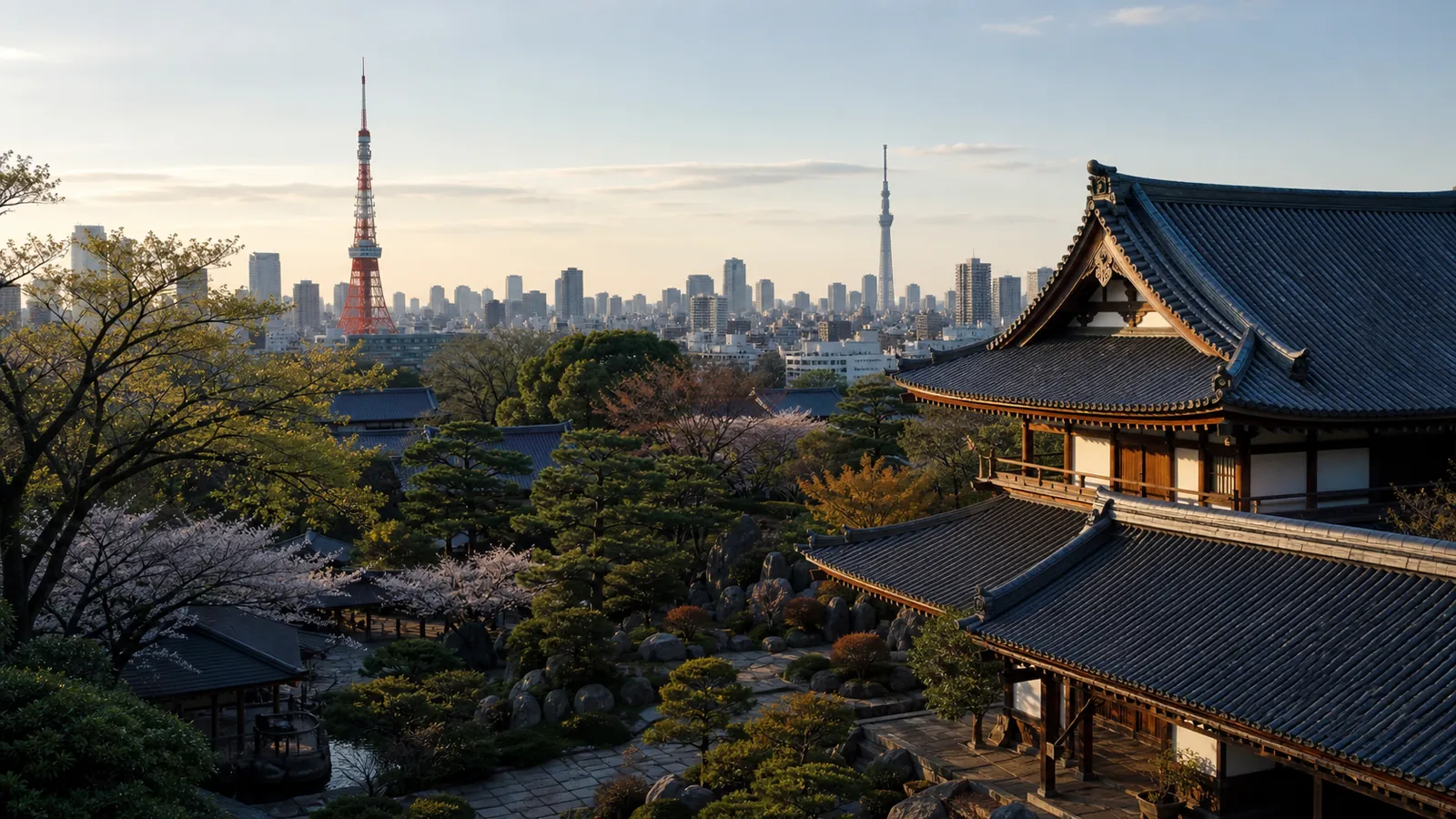
Tokio es el futuro y el pasado a la vez, y funciona con una precisión que desarma: 37 millones de personas y todo impecable, puntual y silencioso. Cara pero no imposible, es la ciudad más segura y ordenada que visitarás — y la que más te va a costar dejar.Tokyo is the future and the past at once, running with a precision that disarms: 37 million people and everything spotless, punctual and quiet. Pricey but not impossible, it's the safest, most orderly city you'll visit — and the hardest to leave.
Mejor épocaBest time
Primavera (cerezos, fin de marzo–abril) y otoño (oct–nov). Junio llueve; agosto es húmedo y pesado.Spring (cherry blossoms, late Mar–Apr) and autumn (Oct–Nov). June is rainy; August is humid and heavy.
PresupuestoBudget
Nómada cómodo ~$1,800–2,800 USD/mes; comer bien es sorprendentemente barato.Comfortable nomad ~$1,800–2,800 USD/mo; eating well is surprisingly cheap.
EntradaEntry
Sin visa 90 días para la mayoría (incluidos mexicanos).Visa-free 90 days for most passports.
ConectividadConnectivity
Internet impecable; el metro es un reloj, pero llévate efectivo y app de traducción.Flawless internet; the metro is clockwork, but bring cash and a translation app.
ViajarTravel
Qué ver y reservar en TokioWhat to see and book in Tokio
Senso-ji
El templo más antiguo, en Asakusa; ve al amanecer, sin gente.The oldest temple, in Asakusa; go at dawn, crowd-free.
Comer
Del sushi de barra al ramen de una silla: aquí no se come mal.From counter sushi to one-seat ramen: you can't eat badly here.
Hakone o Nikko
Onsen con vista al Fuji, o santuarios en el bosque, a un día.Onsen with Fuji views, or forest shrines, a day out.
Arma tu viajePlan your trip
¿Cuántos días te vas a Tokio?How many days in Tokio?
Dónde dormirWhere to stay
Hotel y estanciaHotel & stay
Hoteles en TokioHotels in Tokio
Booking
Estancias largas / departamentosLong stays / apartments
Booking
Reserva con cancelación gratis y paga al llegar.Book with free cancellation and pay on arrival.
Qué hacerWhat to do
Tours y experienciasTours & experiences
Tours en TokioTours in Tokio
GetYourGuide
Paquetes de varios díasMulti-day packages
TourRadar
Los tours y paquetes de varios días también son afiliados.Tours and multi-day packages are affiliate too.
eSIM
Datos al aterrizarData on landing
eSIM para JapóneSIM for Japan
Airalo
Se activa antes de salir; nada de buscar SIM en el aeropuerto.Activates before you leave; no airport SIM hunting.
SeguroInsurance
Elige según tu viajePick by trip type
SafetyWing
Larga estancia / nómadaLong stay / nomad
Heymondo
Viaje corto / turistaShort trip / tourist
IATI
En español / aventuraSpanish / adventure
Cobertura médica y de cancelación; barato y tranquiliza. Cada uno encaja con un viajero distinto.Medical and cancellation cover; cheap peace of mind. Each fits a different traveler.
VivirLive there
¿Y si te quedas una temporada?What if you stay a while?
Costo de vida nómadaNomad cost of living
¿Cuánto necesitas al mes en Tokio?How much do you need per month in Tokio?
Tokio funciona si cobras en dólares o euros y lo que valoras es infraestructura impecable: internet de primer mundo, transporte que nunca falla, seguridad total y comida buenísima a precios sorprendentemente bajos. No funciona si quieres una base ultrabarata ni si esperas resolver todo en inglés: el gasto grande es la renta a corto plazo (los alquileres normales piden garante y varios meses por adelantado, así que acabas pagando el sobreprecio de un amueblado), los departamentos son diminutos y el día a día administrativo es en japonés. Es una ciudad para venir con ingreso estable y quedarte 3-6 meses, no para estirar el presupuesto.Tokyo works if you earn in dollars or euros and what you want is flawless infrastructure: world-class internet, transport that never fails, total safety, and outstanding food at surprisingly low prices. It doesn't work if you're after an ultra-cheap base or expect to handle everything in English: your big line item is short-term rent (normal leases demand a guarantor and several months upfront, so you end up paying the furnished-apartment premium), flats are tiny, and everyday admin happens in Japanese. Come with steady income and stay 3-6 months — this is not the city to stretch a budget.
Austero al mesLean per month
≈US$1.300
Estudio o compartido, cocinas en casa, transporte público.Studio or shared, you cook at home, public transport.
Cómodo al mesComfortable per month
≈US$3.000
Departamento propio en buena zona, comes fuera, coworking.Your own place in a good area, eating out, coworking.
En qué se te vaWhere the money goes
- Departamento de 1 recámara amueblado (plan mensual) en zona nómada — Shibuya, Nakameguro, ShinjukuFurnished 1-bedroom on a monthly plan in a nomad area — Shibuya, Nakameguro, Shinjuku≈US$900–1.600 /mes
- Share house o estudio pequeño lejos del centro (línea Chuo oeste, lado este)Share house or small studio away from the center (west Chuo line, east side)≈US$400–650 /mes
- Coworking, escritorio libre mensual (los espacios locales abajo, WeWork arriba del rango)Coworking, monthly hot desk (local spaces at the low end, WeWork at the top)≈US$120–300 /mes
- Comida del día: teishoku o ramenLunch set (teishoku) or a bowl of ramen≈US$6–9
- Cena en restaurante medio, sin alcoholDinner at a mid-range restaurant, no alcohol≈US$18–28
- Café de especialidadSpecialty coffee≈US$3,50–5
- Transporte: metro y JR con uso diario (Suica/Pasmo)Transport: metro and JR, daily use (Suica/Pasmo)≈US$50–80 /mes
- eSIM o SIM local de datos, 20–30 GBData eSIM or local SIM, 20–30 GB≈US$15–25 /mes
- Fibra en casa de 1 Gbps (si contratas tú, requiere residencia)1 Gbps home fiber (only if you sign it yourself — needs residency)≈US$30–40 /mes
Internet y señalInternet & signal
De lo mejor del planeta. La fibra doméstica es de 1 Gbps nominal (algunos proveedores ofrecen 2 o más) y en la práctica te da cientos de Mbps estables con ping bajísimo, por ≈US$30–40 al mes. El pero: contratar fibra a tu nombre pide tarjeta de residencia y la instalación puede tardar semanas, así que si vienes a corto plazo dependes del wifi del departamento amueblado — casi siempre lo hay, pero suele ser compartido y baja bastante en la noche; pregunta la velocidad real ANTES de reservar. La cobertura móvil 5G es excelente en toda la ciudad, incluido el metro, así que el hotspot del celular es tu respaldo confiable. No hay apagones ni censura. Ojo con los cafés: tienen wifi, pero suele ser lento, con límite de tiempo y con muy pocos enchufes; Tokio no es ciudad para trabajar en cafeterías.Among the best on the planet. Home fiber is nominally 1 Gbps (some providers offer 2 or more) and in practice gives you hundreds of stable Mbps with very low ping, for ≈US$30–40 a month. The catch: signing a fiber contract in your own name requires a residence card and installation can take weeks, so on a short stay you live off the furnished apartment's wifi — nearly always included, but usually shared and noticeably slower at night; ask for the real speed BEFORE you book. Mobile 5G coverage is excellent citywide, subway included, so phone tethering is a reliable backup. No power cuts, no censorship. One warning about cafes: they have wifi, but it's usually slow, time-capped and outlets are scarce — Tokyo is not a cafe-working city.
CoworkingCoworking
Escena grande y madura, pero cara para estándares asiáticos: escritorio libre ≈US$120–300 al mes y día suelto ≈US$13–25. WeWork tiene muchas sedes repartidas por Shibuya, Shinjuku, Roppongi y demás, y es la opción fácil si solo quieres escritorio y buen wifi, aunque está en la parte alta del rango. Si buscas comunidad de verdad y no solo un lugar donde sentarte, Impact Hub Tokyo (zona Meguro) y Ryozan Park (Otsuka) llevan años haciendo eventos y tienen gente que se conoce entre sí. Además existe una capa muy japonesa de espacios y cabinas por horas junto a casi cualquier estación grande, donde pagas ≈US$2–5 la hora sin membresía — perfecto para un día suelto. Advertencia cultural: muchos coworkings japoneses funcionan en silencio de biblioteca; si quieres charla, elige los de comunidad.Big, mature scene, but pricey by Asian standards: a hot desk runs ≈US$120–300 a month and a day pass ≈US$13–25. WeWork has many locations across Shibuya, Shinjuku, Roppongi and beyond, and it's the easy pick if all you want is a desk and solid wifi — though it sits at the top of that range. If you want actual community rather than just a seat, Impact Hub Tokyo (Meguro area) and Ryozan Park (Otsuka) have been running events for years and have people who actually know each other. There's also a very Japanese layer of hourly spaces and work booths next to almost any major station, ≈US$2–5 per hour with no membership — perfect for a one-off day. Cultural heads-up: many Japanese coworkings run at library-level silence; if you want conversation, go for the community-driven ones.
Dónde vive la gente nómadaWhere nomads actually live
Shibuya, Ebisu y Nakameguro es donde se concentra el mundo startup y extranjero: coworkings, cafés de especialidad, todo caminable — y las rentas más altas de la ciudad. Shinjuku, Yoyogi y Sasazuka te dan el mejor nudo de transporte del país con precios un poco más humanos y mucha oferta de amueblados. Hacia el oeste, sobre la línea Chuo, Nakano, Koenji y Kichijoji son la opción clásica de quien se queda meses: más barato que el centro, bohemio, con comida increíble y a 10–20 minutos de Shinjuku (Kichijoji es el más caro de los tres porque es de los barrios más deseados de Tokio). Y en el este, Kuramae, Asakusa y la zona de Sumida son lo más accesible que vas a encontrar cerca del centro, con escena de cafés y talleres independientes y un Tokio más de barrio.Shibuya, Ebisu and Nakameguro is where the startup and foreign crowd clusters: coworkings, specialty coffee, everything walkable — and the highest rents in the city. Shinjuku, Yoyogi and Sasazuka give you the country's best transport hub at slightly more human prices and plenty of furnished stock. West along the Chuo line, Nakano, Koenji and Kichijoji are the classic pick for people staying months: cheaper than the center, bohemian, incredible food, 10–20 minutes from Shinjuku (Kichijoji is the priciest of the three — it's one of Tokyo's most sought-after neighborhoods). And on the east side, Kuramae, Asakusa and the Sumida area are the most affordable you'll find near the center, with an indie cafe and workshop scene and a more neighborhood-feeling Tokyo.
ComunidadCommunity
Conocer extranjeros es fácil; hacer amigos japoneses es lento. Meetup sigue muy vivo en Tokio (intercambios de idioma, eventos tech, grupos de running, cenas de expats) y los coworkings con comunidad organizan cosas casi cada semana. La comunidad hispanohablante en el centro es pequeña: la grande de Japón —peruana y brasileña— vive sobre todo en prefecturas industriales como Aichi, Gunma o Shizuoka, no en Tokio, así que tu círculo será más internacional que latino. El idioma del día a día es japonés: en Shibuya, Roppongi o cualquier cadena te resuelven en inglés, pero en el ayuntamiento, el banco, la inmobiliaria y la clínica no. Con aprender katakana y traer un traductor con cámara vives bien, pero si quieres integrarte de verdad tendrás que estudiar.Meeting other foreigners is easy; making Japanese friends is slow. Meetup is still very active in Tokyo (language exchanges, tech events, running groups, expat dinners) and the community-driven coworkings run something almost every week. The Spanish-speaking community downtown is small: Japan's big one — Peruvian and Brazilian — lives mostly in industrial prefectures like Aichi, Gunma or Shizuoka, not Tokyo, so your circle will be international rather than Latino. Daily life runs in Japanese: in Shibuya, Roppongi or any chain you'll be fine in English, but at city hall, the bank, the rental agency and the clinic you won't. Learning katakana plus a camera translator gets you through, but real integration means actually studying.
Lo que nadie te diceWhat nobody tells you
El golpe fuerte es la renta: el alquiler japonés normal pide garante (o empresa avalista), depósito y muchas veces "key money" que no se devuelve — pueden ser varios meses por adelantado — y bastantes propietarios simplemente no rentan a extranjeros sin tarjeta de residencia. Por eso casi todo nómada acaba en amueblado o share house pagando sobreprecio: presupuéstalo desde el inicio y no cuentes con firmar un contrato normal si vienes a 3 meses. En visados: muchas nacionalidades entran 90 días sin visa como turista, y desde 2024 existe una visa de nómada digital de 6 meses no renovable, con requisito de ingreso alto (del orden de ≈US$65.000–70.000 al año) y seguro médico privado — pero OJO, no está abierta a todo el mundo: solo aplica a países con acuerdo de exención de visa y tratado fiscal con Japón, así que confirma con la embajada si tu pasaporte califica y cuáles son las condiciones vigentes. Clima: junio es temporada de lluvias, de julio a septiembre hace 33–36 °C con humedad brutal, y de agosto a octubre entran tifones; el invierno es frío en departamentos mal aislados y sin calefacción central, así que el clima se te va a la cuenta de luz en los dos extremos. Los sismos son parte de la vida: sientes temblores pequeños con frecuencia, la construcción está preparada, pero descarga la app de alertas y ten claro tu punto de evacuación. Y cuenta con la volatilidad del yen: tu presupuesto en dólares puede moverse bastante en un año sin que nada cambie en Tokio. Lo bueno: la seguridad es excepcional a cualquier hora y en cualquier barrio; tus costos reales son el espacio (18–25 m² es normal) y el tiempo de traslado.The real hit is rent: a standard Japanese lease wants a guarantor (or guarantor company), a deposit and often non-refundable "key money" — several months upfront — and plenty of landlords simply won't rent to foreigners without a residence card. That's why nearly every nomad ends up in a furnished flat or share house paying a premium: budget for it from day one and don't count on signing a normal lease for a 3-month stay. On visas: many nationalities get 90 days visa-free as tourists, and since 2024 there's a 6-month, non-renewable digital nomad visa with a high income requirement (on the order of ≈US$65,000–70,000 a year) plus private health insurance — but heads up, it is not open to everyone: it only covers countries that have both a visa-exemption agreement and a tax treaty with Japan, so confirm with the embassy whether your passport qualifies and what the current terms are. Weather: June is rainy season, July to September runs 33–36 °C with brutal humidity, and typhoons come through August to October; winter is cold inside poorly insulated flats with no central heating, so climate control hits your electricity bill at both extremes. Earthquakes are part of life: you'll feel small tremors regularly, buildings are engineered for it, but install the alert app and know your evacuation point. Also factor in yen volatility: your dollar budget can swing meaningfully in a year with nothing in Tokyo actually changing. The upside: safety is exceptional at any hour in any neighborhood; your real costs are space (18–25 m² is normal) and commute time.
Cifras en dólares y aproximadas, revisadas en septiembre de 2026, para una persona sola. Los precios de renta se mueven rápido en las ciudades con muchos nómadas — úsalas para comparar y presupuestar, no como cotización.Figures in US dollars and approximate, reviewed in September 2026, for one person. Rents move fast in nomad-heavy cities — use these to compare and budget, not as a quote.
Dónde poner tu base en Tokio, por barrio:Where to base yourself in Tokio, by neighborhood:
Shimokitazawa
Vintage, indie y de bajo perfil: el Tokio joven y creativo.Vintage, indie and low-key: young, creative Tokyo.
Shibuya / Shinjuku
El neón, la energía y la vida nocturna que imaginabas.The neon, energy and nightlife you imagined.
Yanaka / Asakusa
El Tokio viejo de templos, callejones y casas de té.Old Tokyo of temples, alleys and tea houses.
Para quedarteTo settle in
Dinero y conexiónMoney & connection
Wise
Cuenta y tarjeta multidivisaMulti-currency account & card
VPN
Wifi público y geobloqueoPublic wifi & geoblocking
SafetyWing
Seguro de larga estanciaLong-stay insurance
Lo básico si te quedas meses: cuenta multidivisa, VPN y seguro de larga estancia.The basics if you stay months: multi-currency account, VPN and long-stay insurance.
RequisitosRequirements
¿Qué necesitas para entrar?What do you need to enter?
Requisitos de entradaEntry requirements
¿Necesitas visa?Do you need a visa?
Cargando…Loading…
¿Vas por más que turismo? Vías para Japón:Going for more than tourism? Routes for Japan:
Requisitos, tiempos, costo y fuente oficial de cada una.Requirements, timelines, cost and official source for each.
Referencia orientativa; las reglas cambian. Confirma siempre con la embajada o tu aerolínea antes de viajar.Guidance only; rules change. Always confirm with the embassy or your airline before traveling.
- Pasaporte: vigente al menos 6 meses después de tu viaje.Passport: valid at least 6 months beyond your trip.
- Visa: depende de tu nacionalidad y del tiempo de estancia. Revisa el caso de Japón en la página de requisitos.Visa: depends on your nationality and length of stay. Check the Japan case on the requirements page.
- Seguro: algunos países lo piden en frontera; te dejamos uno arriba.Insurance: some countries require it at the border; there's one above.
Algunos enlaces son de afiliado: si reservas por ellos, ganamos una comisión sin costo extra para ti. Solo recomendamos lo que usaríamos.Some links are affiliate links: if you book through them we earn a commission at no extra cost to you. We only recommend what we'd use.
Más en JapónMore in Japan
Yokohama
Capital de estado/provinciaState/provincial capital
Osaka
Capital de estado/provinciaState/provincial capital
Nagoya
Capital de estado/provinciaState/provincial capital
Sapporo
Capital de estado/provinciaState/provincial capital
Kobe
Capital de estado/provinciaState/provincial capital
Kyoto
Capital de estado/provinciaState/provincial capital