DestinosDestinations · Puerto RicoPuerto Rico · Capital del paísNational capital
San Juan
Aprox. 418,140 habitantesApprox. 418,140 people
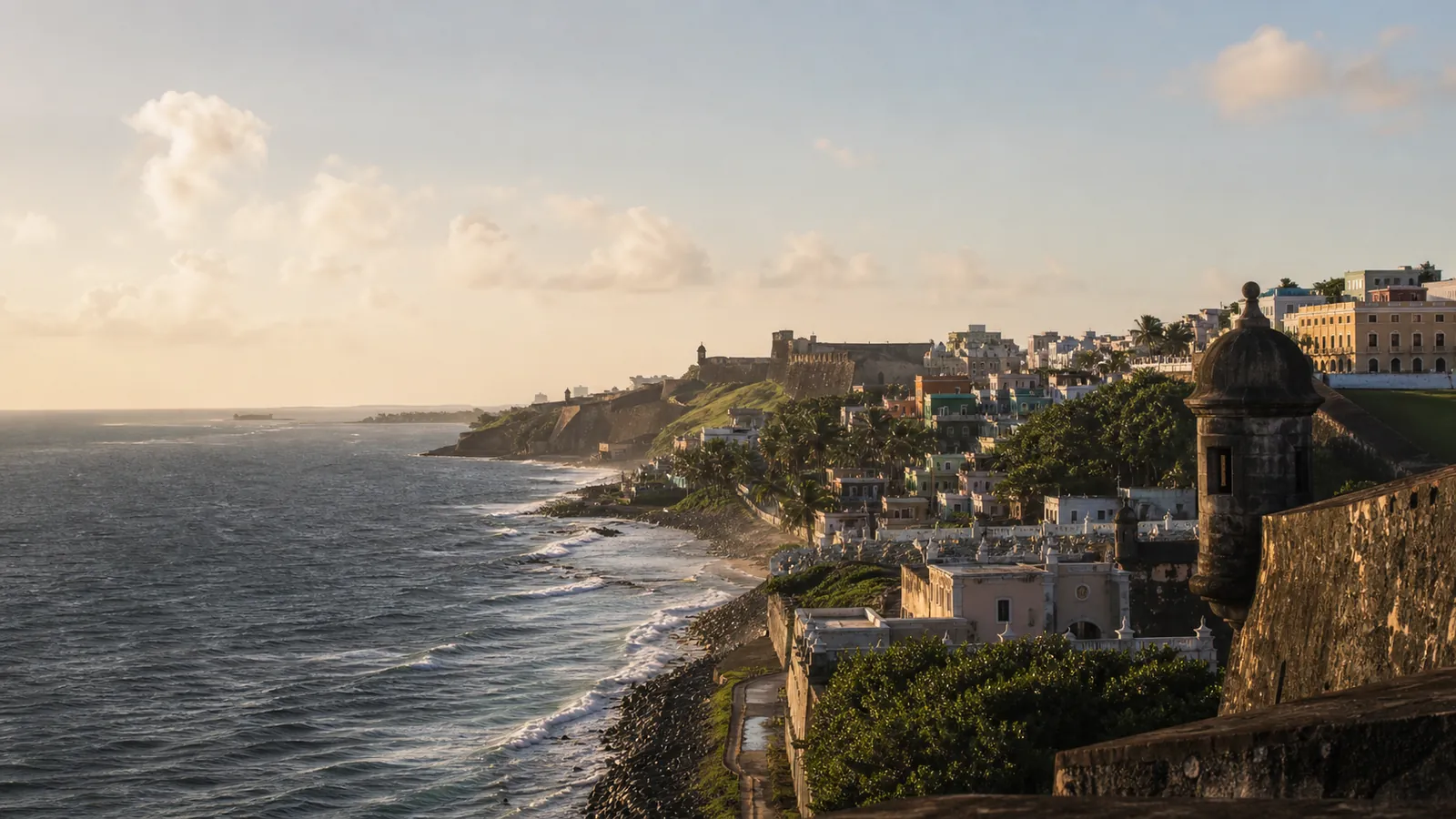
San Juan es el Caribe con pasaporte gringo: el Viejo San Juan colonial y adoquinado, playas de Condado, salsa y reguetón en el aire y el dólar como moneda. Cálido y musical, mezcla 500 años de historia con energía boricua — ojo, es territorio de EE. UU., así que aplican sus reglas de entrada.San Juan is the Caribbean with a US passport: colonial cobblestoned Old San Juan, Condado beaches, salsa and reggaeton in the air and the dollar as currency. Warm and musical, it blends 500 years of history with Boricua energy — note, it's US territory, so US entry rules apply.
Mejor épocaBest time
Diciembre–abril (seco). Temporada de huracanes de agosto a octubre.December–April (dry). Hurricane season August–October.
PresupuestoBudget
Nómada cómodo ~$1,500–2,200 USD/mes; caro, es EE. UU.Comfortable nomad ~$1,500–2,200 USD/mo; pricey, it's the US.
EntradaEntry
Territorio de EE. UU.: aplican visa/ESTA estadounidenses. Los mexicanos necesitan visa de EE. UU.US territory: US visa/ESTA rules apply. Mexican passport holders need a US visa.
ConectividadConnectivity
Fibra buena (red de EE. UU.); hub aéreo del Caribe.Good fiber (US network); a Caribbean flight hub.
ViajarTravel
Qué ver y reservar en San JuanWhat to see and book in San Juan
El Morro
La fortaleza sobre el mar; vuela papalote en la explanada.The fortress over the sea; fly a kite on the esplanade.
El Yunque
La única selva tropical del sistema de bosques de EE. UU., a una hora.The only rainforest in the US forest system, an hour out.
Bahías bioluminiscentes
Agua que brilla de noche en Fajardo o Vieques.Water that glows at night in Fajardo or Vieques.
Arma tu viajePlan your trip
¿Cuántos días te vas a San Juan?How many days in San Juan?
Dónde dormirWhere to stay
Hotel y estanciaHotel & stay
Hoteles en San JuanHotels in San Juan
Booking
Estancias largas / departamentosLong stays / apartments
Booking
Reserva con cancelación gratis y paga al llegar.Book with free cancellation and pay on arrival.
Qué hacerWhat to do
Tours y experienciasTours & experiences
Tours en San JuanTours in San Juan
GetYourGuide
Paquetes de varios díasMulti-day packages
TourRadar
Los tours y paquetes de varios días también son afiliados.Tours and multi-day packages are affiliate too.
eSIM
Datos al aterrizarData on landing
eSIM para Puerto RicoeSIM for Puerto Rico
Airalo
Se activa antes de salir; nada de buscar SIM en el aeropuerto.Activates before you leave; no airport SIM hunting.
SeguroInsurance
Elige según tu viajePick by trip type
SafetyWing
Larga estancia / nómadaLong stay / nomad
Heymondo
Viaje corto / turistaShort trip / tourist
IATI
En español / aventuraSpanish / adventure
Cobertura médica y de cancelación; barato y tranquiliza. Cada uno encaja con un viajero distinto.Medical and cancellation cover; cheap peace of mind. Each fits a different traveler.
VivirLive there
¿Y si te quedas una temporada?What if you stay a while?
Costo de vida nómadaNomad cost of living
¿Cuánto necesitas al mes en San Juan?How much do you need per month in San Juan?
San Juan funciona muy bien si tienes pasaporte estadounidense o residencia en EE.UU.: entras sin trámite, cobras en dólares, tu banco y tu plan de celular funcionan igual que en Miami, y aun así vives en el Caribe, en español y con playa a diez minutos. Funciona mal si vienes buscando precios latinoamericanos: la isla importa casi todo y el súper, la luz y la renta se sienten como una ciudad cara de EE.UU., no como Medellín o Ciudad de México. Y hay dos cosas que tienes que aceptar antes de comprar el vuelo: la red eléctrica falla de verdad y con frecuencia, y si tu pasaporte no es de EE.UU. esto es entrada a territorio estadounidense — necesitas visa o ESTA, con todo lo que eso implica.San Juan works really well if you hold a US passport or US residency: you walk in with zero paperwork, you get paid in dollars, your bank and phone plan behave exactly as they do in Miami — and you still live in the Caribbean, in Spanish, ten minutes from the beach. It works badly if you came looking for Latin American prices: the island imports almost everything, and groceries, electricity and rent feel like an expensive US city, not like Medellín or Mexico City. Two things you have to accept before booking: the power grid genuinely fails, and often — and if your passport isn't American, this is entry into US territory, so you need a visa or ESTA, with everything that entails.
Austero al mesLean per month
≈US$2.200
Estudio o compartido, cocinas en casa, transporte público.Studio or shared, you cook at home, public transport.
Cómodo al mesComfortable per month
≈US$4.200
Departamento propio en buena zona, comes fuera, coworking.Your own place in a good area, eating out, coworking.
En qué se te vaWhere the money goes
- Departamento de 1 recámara amueblado en Condado, Ocean Park o Miramar (mensual, contrato corto o Airbnb largo)Furnished 1-bedroom in Condado, Ocean Park or Miramar (monthly, short lease or long Airbnb)≈US$1.500–2.500
- Departamento o estudio fuera del circuito turístico (Santurce interior, Río Piedras, Hato Rey, Carolina, Bayamón)Apartment or studio outside the tourist circuit (inner Santurce, Río Piedras, Hato Rey, Carolina, Bayamón)≈US$800–1.300
- Luz (LUMA) + agua con el aire acondicionado prendido buena parte del día — la tarifa eléctrica es cara para lo que se paga en EE.UU. y es el recibo que más sorprendePower (LUMA) + water with the A/C running much of the day — the electric rate is expensive by US standards and it's the bill that surprises people most≈US$150–300
- Internet de fibra o cable en casa (Liberty o Claro, planes de cientos de Mbps)Home fiber or cable internet (Liberty or Claro, plans in the hundreds of Mbps)≈US$60–100
- Coworking, escritorio flexible mensual; el día suelto suele andar por ≈US$25–35Coworking, monthly hot desk; a day pass usually runs ≈US$25–35≈US$150–300
- Almuerzo de comida criolla en una fonda o local de barrio (un café de especialidad va aparte, ≈US$4–6)Criollo lunch at a fonda or neighborhood spot (a specialty coffee is extra, ≈US$4–6)≈US$10–16
- Cena en restaurante medio, con bebida, por persona (en Condado y el Viejo San Juan, más)Dinner at a mid-range restaurant, drink included, per person (more in Condado and Old San Juan)≈US$30–50
- Súper mensual para una persona cocinando en casa — casi todo llega importado y se nota en la cajaMonthly groceries for one person cooking at home — almost everything is imported and you feel it at the register≈US$400–600
- Carro de renta mensual — varía muchísimo: en temporada alta (invierno) se dispara, y las agencias locales con tarifa mensual salen bastante mejor que las grandes del aeropuerto. Un Uber corto dentro de San Juan sale ≈US$8–15Monthly rental car — varies a lot: it spikes in winter high season, and local agencies with monthly rates beat the big airport brands by a wide margin. A short Uber within San Juan runs ≈US$8–15≈US$600–1.200
Internet y señalInternet & signal
La conexión en sí es buena: en el área metro hay fibra y cable de Liberty y Claro con planes que en la práctica te dan cientos de Mbps, suficiente para videollamadas todo el día sin pensarlo. La cobertura móvil 4G/5G en San Juan es sólida, y si tienes un plan de EE.UU. funciona aquí como en cualquier estado, sin roaming ni cargos extra — eso solo ya te ahorra el dolor de cabeza de conseguir SIM local. El problema no es el cable: es la luz. Los apagones son parte de la vida en Puerto Rico, desde bajones de un rato hasta caídas grandes del sistema que dejan a media isla sin servicio, y cuando se va la luz también se cae tu wifi. Da igual que pagues el mejor plan. Por eso aquí la pregunta al ver un apartamento no es "¿qué velocidad tiene?" sino "¿tiene planta eléctrica o placas con batería?". El agua también se interrumpe tras tormentas y en épocas de sequía, así que ten reserva embotellada. Y ten siempre datos móviles como respaldo (el celular aguanta una llamada), una batería portátil decente y, si tu trabajo no perdona, prioriza edificios con generador aunque pagues más.The connection itself is good: in the metro area Liberty and Claro sell fiber and cable plans that in practice deliver hundreds of Mbps — plenty for a full day of video calls without thinking about it. Mobile 4G/5G coverage in San Juan is solid, and if you have a US phone plan it works here exactly as it does in any state, no roaming or extra charges, which alone saves you the local-SIM headache. The problem isn't the cable — it's the power. Blackouts are part of life in Puerto Rico, from short outages to large system failures that leave much of the island dark, and when the power goes your wifi goes with it. It doesn't matter what plan you pay for. That's why the question when viewing an apartment isn't "how fast is the internet?" but "does it have a generator or solar with batteries?". Water service also gets interrupted after storms and in dry spells, so keep bottles stored. Always keep mobile data as backup (your phone can carry a call), a decent power bank, and if your work can't take a hit, prioritize buildings with a generator even if you pay more.
CoworkingCoworking
La escena existe y es cómoda, pero es chica comparada con Medellín o Lisboa: hablamos de un puñado de espacios buenos concentrados en el Viejo San Juan, Santurce, Miramar y Hato Rey, no de decenas. El más conocido y el que casi todo el mundo te va a nombrar es Piloto 151, el pionero del coworking en la isla y todavía punto de encuentro de la escena tech y de los recién llegados; los espacios abren y cierran, así que confirma sedes y precios actuales antes de comprometerte. El escritorio flexible mensual anda en ≈US$150–300 según el sitio y la oficina privada sube bastante; el día suelto suele estar por ≈US$25–35. Hay dos ventajas concretas de pagar coworking aquí más allá de la silla: muchos tienen generador, así que cuando se va la luz en tu edificio tienes dónde caer — pregúntalo explícitamente, no lo des por hecho — y es la forma más rápida de conocer gente. Alternativa: la cultura de café de especialidad en Santurce y el Viejo San Juan es buena y se puede trabajar desde ahí, pero los locales son pequeños, el wifi es irregular y no cuentes con enchufe.The scene exists and is comfortable, but it's small compared to Medellín or Lisbon: a handful of good spaces concentrated in Old San Juan, Santurce, Miramar and Hato Rey, not dozens of them. The best known — and the one everyone will name — is Piloto 151, the island's coworking pioneer and still a meeting point for the tech scene and for new arrivals; spaces open and close here, so check current locations and rates before you commit. A monthly hot desk runs ≈US$150–300 depending on the space, and private offices go up sharply from there; day passes are usually ≈US$25–35. Two concrete reasons to pay for coworking here beyond the chair: many of them have a generator, so when your building loses power you have somewhere to land — ask explicitly, don't assume — and it's the fastest way to meet people. Alternative: specialty coffee culture in Santurce and Old San Juan is good and workable, but the places are small, the wifi is hit-or-miss, and don't count on an outlet.
Dónde vive la gente nómadaWhere nomads actually live
Condado es lo más parecido a un South Beach caribeño: playa, torres, restaurantes, todo caminable, todo en inglés si quieres — y lo más caro del mapa. Es la opción por defecto de quien llega y no quiere pensar. Ocean Park, pegado al este, es la favorita de mucha gente que se queda meses: más residencial y bajito, con muy buena playa para el día a día y ambiente de vecindario, aunque tiene menos vida a pie y casi obliga a moverte en carro o Uber. Santurce es donde está pasando la ciudad: la zona de Calle Loíza y La Placita concentra los mejores restaurantes, bares y galerías, la renta baja respecto a Condado y se siente puertorriqueño de verdad; es dispareja cuadra a cuadra y por La Placita hay ruido de fiesta los fines de semana. Miramar es la jugada tranquila: residencial, arbolado, edificios antiguos bonitos, a un paso de Santurce y del Viejo San Juan, con mejor relación precio-calidad para quedarse. El Viejo San Juan es precioso y muy caminable, pero es el casco turístico: ruido de noche, estacionar es una pesadilla y los alquileres de corto plazo lo tienen inflado. Isla Verde, ya en Carolina, es playa y hoteles al lado del aeropuerto — cómodo si viajas mucho, poco barrio. Más barato y mucho más local: Hato Rey (la zona de oficinas) y Río Piedras, junto a la universidad.Condado is the closest thing to a Caribbean South Beach: beach, towers, restaurants, all walkable, all in English if you want — and the priciest spot on the map. It's the default for people who arrive and don't want to think. Ocean Park, right next door to the east, is the favorite of people who stay for months: more residential and low-rise, with a great everyday beach and a real neighborhood feel, though there's less to walk to and you'll lean on a car or Uber. Santurce is where the city is actually happening: the Calle Loíza and La Placita area has the best restaurants, bars and galleries, rent drops compared to Condado, and it feels genuinely Puerto Rican; it's uneven block to block, and around La Placita weekends are loud. Miramar is the quiet play: residential, leafy, handsome older buildings, minutes from both Santurce and Old San Juan, with better value if you're staying a while. Old San Juan is beautiful and very walkable, but it's the tourist core: noisy at night, parking is a nightmare, and short-term rentals have inflated it. Isla Verde, technically in Carolina, is beach and hotels next to the airport — convenient if you fly a lot, thin on neighborhood life. Cheaper and much more local: Hato Rey (the office district) and Río Piedras, near the university.
ComunidadCommunity
Conocer gente es fácil si te mueves: hay una comunidad grande de estadounidenses y de puertorriqueños que volvieron de Estados Unidos, más un flujo constante de remotos, así que en coworkings, clases de surf, running clubs y la vida de bares de Santurce se hace amistad rápido. El idioma del día a día es el español — puertorriqueño, rápido y con mucho anglicismo — pero prácticamente todo el mundo en el área metro se maneja en inglés, así que puedes vivir sin hablar español. Eso tiene su trampa: es muy fácil quedarte en la burbuja de recién llegados de Condado y no conocer a un solo boricua. Si vienes de Latinoamérica juegas con ventaja evidente, y la gente es cálida y conversadora; el atajo para entrar de verdad es apuntarte a algo local (surf, salsa, voleibol de playa, un gimnasio de barrio) y no organizar tu vida entera alrededor de otros nómadas de paso.Meeting people is easy if you put yourself out there: there's a large community of stateside Americans and of Puerto Ricans who moved back from the mainland, plus a steady flow of remote workers, so coworkings, surf lessons, run clubs and Santurce's bar scene turn into friendships fast. Daily life runs in Spanish — Puerto Rican Spanish, fast and full of anglicisms — but nearly everyone in the metro area handles English, so you can live here without Spanish. That's the trap: it's very easy to stay in the Condado newcomer bubble and never meet an actual boricua. If you're coming from Latin America you have an obvious edge, and people are warm and chatty; the shortcut to getting in for real is joining something local (surf, salsa, beach volleyball, a neighborhood gym) rather than building your whole life around other passing nomads.
Lo que nadie te diceWhat nobody tells you
Lo que te diría un amigo, sin adornos. La luz. Es el tema número uno y no es folclor: los apagones son frecuentes, van desde bajones cortos hasta caídas grandes del sistema, y arrastran tu internet y tu aire acondicionado con ellos. Antes de firmar, pregunta si el edificio tiene generador o placas solares con batería, cuánto cubre y si el apartamento entero queda respaldado o solo el elevador y los pasillos. Entrada, no solo visa. Puerto Rico es territorio de EE.UU.: si eres estadounidense o residente, llegas como en un vuelo doméstico y no hay control migratorio. Si tienes pasaporte mexicano, colombiano, argentino, etc., aplican las reglas de EE.UU. — visa B1/B2 o ESTA según tu nacionalidad — y el oficial de CBP decide cuánto tiempo te deja. Trabajar remoto para tu empleador de fuera se tolera en general, pero no puedes trabajar para una empresa estadounidense ni instalarte a vivir con estatus de turista; confirma tu caso antes de comprar vuelos. Cuesta más de lo que crees. Casi todo llega por barco y el súper, los muebles y los servicios lo reflejan; presupuesta más comida y más luz que en cualquier ciudad latinoamericana. Carro. Sin carro vives bien solo si te quedas en el eje Viejo San Juan–Condado–Santurce–Ocean Park y usas Uber. El Tren Urbano no llega a la zona turística ni al aeropuerto, las guaguas son poco confiables, y para ver el resto de la isla el carro no se discute. Suma tráfico pesado en hora pico. Huracanes. La temporada va del 1 de junio al 30 de noviembre y lo serio se concentra entre agosto y octubre. No planees mudarte sin un plan: seguro de viaje que cubra evacuación, agua y comida de reserva, y flexibilidad en el vuelo. Mosquitos. El dengue es endémico y en 2024 Puerto Rico declaró epidemia — el repelente no es opcional, sobre todo al amanecer y al atardecer. Seguridad. El área metro tiene una tasa de homicidios alta para EE.UU., aunque la mayoría de esa violencia es entre grupos y no toca al visitante. Lo que sí te puede tocar: robos de auto y de cosas dejadas dentro del carro, y carteristas en zonas turísticas. No dejes nada visible en el vehículo, evita La Perla y los caseríos si no conoces, y de noche muévete en Uber. Impuestos. Vas a oír mucho de la Ley 60 y los incentivos a quien se muda: aplican solo a ciudadanos o residentes de EE.UU. que se convierten en residentes bona fide de Puerto Rico de verdad (mudanza real, no domicilio de papel), están bajo lupa del IRS y no son un truquito de un mes. Si te interesa, habla con un CPA de la isla antes de mover nada — y ten en cuenta que en la calle hay molestia real con la gentrificación y la subida de rentas que trajo esa ola. Llegar con humildad ayuda.What a friend would actually tell you. The power. This is the number one issue and it isn't folklore: blackouts are frequent, ranging from brief dips to large system failures, and they take your internet and your A/C with them. Before signing anything, ask whether the building has a generator or solar with battery storage, how much it covers, and whether the whole apartment is backed up or just the elevator and hallways. Entry, not just visas. Puerto Rico is US territory: if you're a US citizen or resident, you arrive as on a domestic flight with no immigration control. If you hold a Mexican, Colombian, Argentine or similar passport, US rules apply — B1/B2 visa or ESTA depending on nationality — and the CBP officer decides how long you get. Remote work for your employer back home is generally tolerated, but you can't work for a US company or settle in on tourist status; confirm your own case before booking flights. It costs more than you think. Almost everything arrives by ship, and groceries, furniture and services reflect it; budget more for food and power than in any Latin American city. A car. You can live car-free only if you stay on the Old San Juan–Condado–Santurce–Ocean Park axis and use Uber. The Tren Urbano doesn't reach the tourist areas or the airport, buses are unreliable, and to see the rest of the island a car isn't up for debate. Add heavy rush-hour traffic. Hurricanes. The season runs June 1 to November 30, with the serious stretch concentrated between August and October. Don't plan a move without a plan: travel insurance that covers evacuation, stored water and food, and a flexible ticket. Mosquitoes. Dengue is endemic and Puerto Rico declared an epidemic in 2024 — repellent isn't optional, especially at dawn and dusk. Safety. The metro area has a high homicide rate by US standards, though most of that violence is between groups and doesn't touch visitors. What can touch you: car theft and break-ins, and pickpocketing in tourist areas. Leave nothing visible in the car, skip La Perla and public housing complexes if you don't know them, and take an Uber at night. Taxes. You'll hear a lot about Act 60 and the incentives for people who relocate: they apply only to US citizens or residents who become genuine bona fide residents of Puerto Rico (an actual move, not a paper address), they're under IRS scrutiny, and they're not a one-month trick. If it interests you, talk to a local CPA before moving anything — and know that on the street there's real frustration about the gentrification and rent increases that wave brought. Showing up humble helps.
Cifras en dólares y aproximadas, revisadas en septiembre de 2026, para una persona sola. Los precios de renta se mueven rápido en las ciudades con muchos nómadas — úsalas para comparar y presupuestar, no como cotización.Figures in US dollars and approximate, reviewed in September 2026, for one person. Rents move fast in nomad-heavy cities — use these to compare and budget, not as a quote.
Dónde poner tu base en San Juan, por barrio:Where to base yourself in San Juan, by neighborhood:
Viejo San Juan
El casco colonial de adoquín azul y casas de colores.The colonial quarter of blue cobbles and colored houses.
Condado
Playa, hoteles y vida nocturna, a lo Miami.Beach, hotels and nightlife, Miami-style.
Santurce
Arte, murales y la mejor escena local y gastronómica.Art, murals and the best local and food scene.
Para quedarteTo settle in
Dinero y conexiónMoney & connection
Wise
Cuenta y tarjeta multidivisaMulti-currency account & card
VPN
Wifi público y geobloqueoPublic wifi & geoblocking
SafetyWing
Seguro de larga estanciaLong-stay insurance
Lo básico si te quedas meses: cuenta multidivisa, VPN y seguro de larga estancia.The basics if you stay months: multi-currency account, VPN and long-stay insurance.
RequisitosRequirements
¿Qué necesitas para entrar?What do you need to enter?
Requisitos de entradaEntry requirements
¿Necesitas visa?Do you need a visa?
Cargando…Loading…
¿Vas por más que turismo? Vías para Estados Unidos:Going for more than tourism? Routes for United States:
Requisitos, tiempos, costo y fuente oficial de cada una.Requirements, timelines, cost and official source for each.
Referencia orientativa; las reglas cambian. Confirma siempre con la embajada o tu aerolínea antes de viajar.Guidance only; rules change. Always confirm with the embassy or your airline before traveling.
- Pasaporte: vigente al menos 6 meses después de tu viaje.Passport: valid at least 6 months beyond your trip.
- Visa: depende de tu nacionalidad y del tiempo de estancia. Revisa el caso de Puerto Rico en la página de requisitos.Visa: depends on your nationality and length of stay. Check the Puerto Rico case on the requirements page.
- Seguro: algunos países lo piden en frontera; te dejamos uno arriba.Insurance: some countries require it at the border; there's one above.
Algunos enlaces son de afiliado: si reservas por ellos, ganamos una comisión sin costo extra para ti. Solo recomendamos lo que usaríamos.Some links are affiliate links: if you book through them we earn a commission at no extra cost to you. We only recommend what we'd use.
Más en Puerto RicoMore in Puerto Rico
Bayamón
Capital de estado/provinciaState/provincial capital
Carolina
Capital de estado/provinciaState/provincial capital
Ponce
Capital de estado/provinciaState/provincial capital
Caguas
Capital de estado/provinciaState/provincial capital
Guaynabo
Capital de estado/provinciaState/provincial capital
Mayagüez
Capital de estado/provinciaState/provincial capital