DestinosDestinations · AlemaniaGermany · Capital de estado/provinciaState/provincial capital
Múnich
Aprox. 1,260,391 habitantesApprox. 1,260,391 people
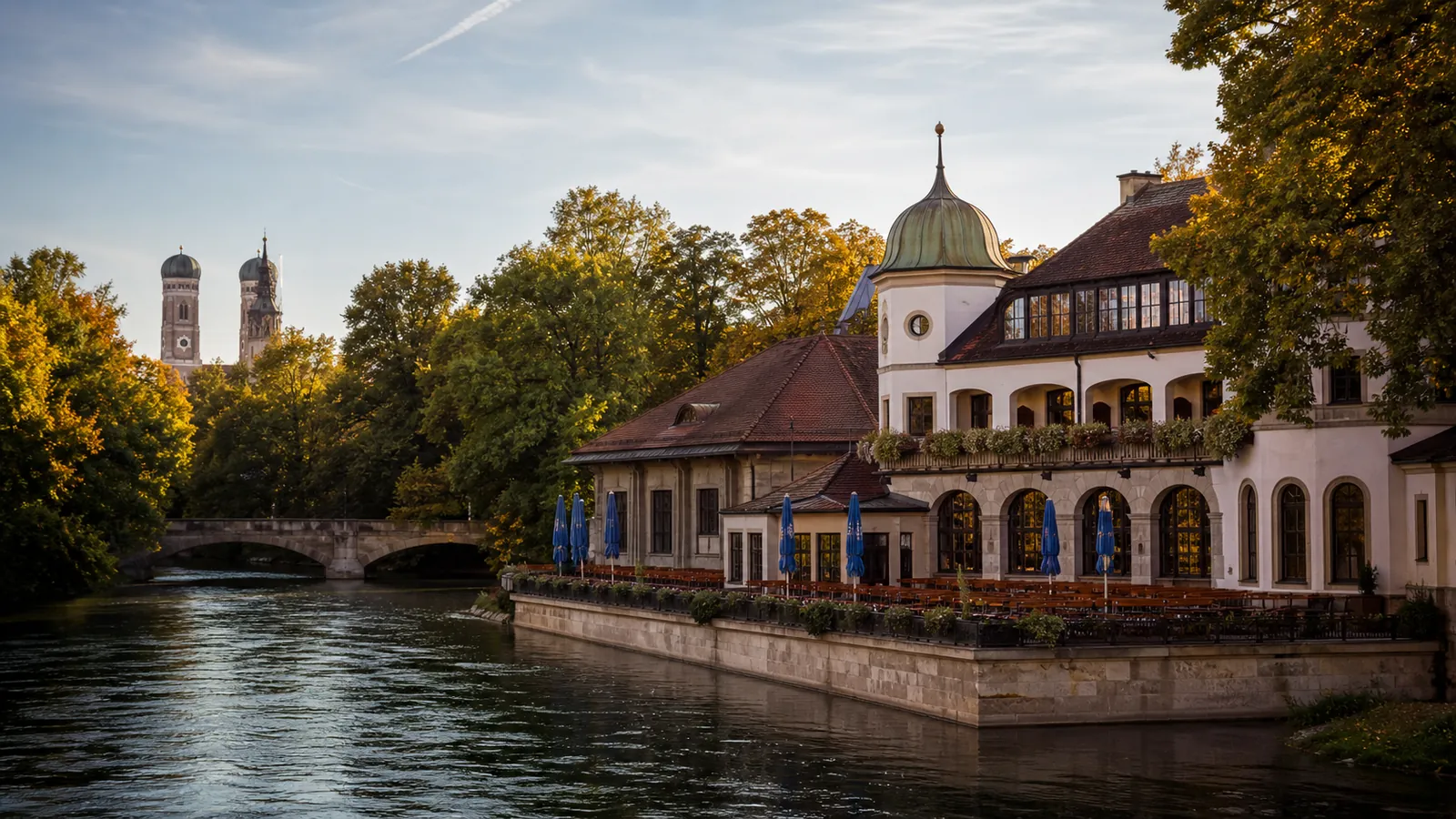
Múnich es la Alemania próspera y ordenada: cervecerías centenarias, plazas barrocas, parques enormes y los Alpes asomando al sur. Segura, limpia y con una calidad de vida altísima (y precios acordes), mezcla tradición bávara —lederhosen y Oktoberfest— con tecnología e ingeniería de punta. Formal, pero encantadora.Munich is prosperous, orderly Germany: century-old beer halls, baroque squares, huge parks and the Alps peeking to the south. Safe, clean and with sky-high quality of life (and matching prices), it blends Bavarian tradition — lederhosen and Oktoberfest — with cutting-edge tech and engineering. Formal, but charming.
Mejor épocaBest time
Mayo–septiembre. Octubre trae el Oktoberfest; el invierno es frío con mercados navideños.May–September. October brings Oktoberfest; winter is cold with Christmas markets.
PresupuestoBudget
Nómada cómodo ~$1,800–2,700 USD/mes; la ciudad más cara de Alemania.Comfortable nomad ~$1,800–2,700 USD/mo; Germany's priciest city.
EntradaEntry
Schengen: 90 días sin visa para la mayoría.Schengen: 90 days visa-free for most.
ConectividadConnectivity
Fibra excelente y transporte modélico; base para los Alpes y Baviera.Excellent fiber and model transit; a base for the Alps and Bavaria.
ViajarTravel
Qué ver y reservar en MúnichWhat to see and book in Múnich
Jardín Inglés
Uno de los parques urbanos más grandes del mundo; surf de río incluido.One of the world's largest urban parks; river surfing included.
Cervecerías
Un litro y codillo en la Hofbräuhaus o en un biergarten.A liter and pork knuckle at the Hofbräuhaus or a beer garden.
Los Alpes
Castillos de cuento y montañas, en tren a 1–2 h.Fairy-tale castles and mountains, 1–2 h by train.
Arma tu viajePlan your trip
¿Cuántos días te vas a Múnich?How many days in Múnich?
Dónde dormirWhere to stay
Hotel y estanciaHotel & stay
Hoteles en MúnichHotels in Múnich
Booking
Estancias largas / departamentosLong stays / apartments
Booking
Reserva con cancelación gratis y paga al llegar.Book with free cancellation and pay on arrival.
Qué hacerWhat to do
Tours y experienciasTours & experiences
Tours en MúnichTours in Múnich
GetYourGuide
Paquetes de varios díasMulti-day packages
TourRadar
Los tours y paquetes de varios días también son afiliados.Tours and multi-day packages are affiliate too.
eSIM
Datos al aterrizarData on landing
eSIM para AlemaniaeSIM for Germany
Airalo
Se activa antes de salir; nada de buscar SIM en el aeropuerto.Activates before you leave; no airport SIM hunting.
SeguroInsurance
Elige según tu viajePick by trip type
SafetyWing
Larga estancia / nómadaLong stay / nomad
Heymondo
Viaje corto / turistaShort trip / tourist
IATI
En español / aventuraSpanish / adventure
Cobertura médica y de cancelación; barato y tranquiliza. Cada uno encaja con un viajero distinto.Medical and cancellation cover; cheap peace of mind. Each fits a different traveler.
VivirLive there
¿Y si te quedas una temporada?What if you stay a while?
Costo de vida nómadaNomad cost of living
¿Cuánto necesitas al mes en Múnich?How much do you need per month in Múnich?
Múnich funciona si tu ingreso está en euros o dólares fuertes y valoras que TODO sirva: transporte impecable, seguridad real, montaña y lagos a una hora, y un ecosistema de startups y corporativos (BMW, Siemens, Allianz, oficinas de Google y Apple) con el que sí puedes hacer negocio. No funciona si vienes a estirar el presupuesto: es la ciudad más cara de Alemania y el mercado de renta está de verdad roto — conseguir depa es más difícil que pagarlo. Tampoco es la base ideal si buscas calor y calle: el invierno es largo y gris, y la vida social se mete a los interiores de noviembre a marzo.Munich works if you earn in euros or strong dollars and you value everything actually working: flawless transit, real safety, mountains and lakes an hour away, and a startup-plus-corporate scene (BMW, Siemens, Allianz, Google and Apple offices) you can genuinely do business with. It does not work if you came to stretch a budget: it's Germany's most expensive city and the rental market is genuinely broken — finding a flat is harder than paying for it. It's also not your base if you want warmth and street life: the winter is long and grey, and social life moves indoors from November to March.
Austero al mesLean per month
≈US$1.700
Estudio o compartido, cocinas en casa, transporte público.Studio or shared, you cook at home, public transport.
Cómodo al mesComfortable per month
≈US$3.400
Departamento propio en buena zona, comes fuera, coworking.Your own place in a good area, eating out, coworking.
En qué se te vaWhere the money goes
- Cuarto en piso compartido (WG) en zona céntricaRoom in a shared flat (WG) in a central area≈US$750–1.100/mes
- Depa de 1 recámara amueblado por meses ("Wohnen auf Zeit"), zona buenaFurnished 1-bedroom on a monthly basis ("Wohnen auf Zeit"), good area≈US$1.700–2.300/mes
- Depa de 1 recámara sin amueblar fuera del centro, con gastos incluidos (Warmmiete)Unfurnished 1-bedroom outside the centre, utilities included (Warmmiete)≈US$1.300–1.600/mes
- Coworking, escritorio flexible mensualCoworking, monthly flex desk≈US$200–350/mes
- Súper para una persona que cocina en casaGroceries for one person who cooks at home≈US$300–400/mes
- Comida del día en restaurante (Mittagsmenü)Set lunch menu at a restaurant (Mittagsmenü)≈US$14–19
- Cena en restaurante medio (un plato + bebida)Dinner at a mid-range restaurant (one dish + drink)≈US$30–40
- Maß (litro) de cerveza en biergarten — en el Oktoberfest sube a ≈US$17–19Maß (one litre) of beer at a beer garden — at Oktoberfest it jumps to ≈US$17–19≈US$12–14
- Deutschlandticket: transporte local y regional ilimitado en toda Alemania (no aplica en trenes de larga distancia ICE/IC)Deutschlandticket: unlimited local and regional transport across Germany (not valid on long-distance ICE/IC trains)≈US$70–75/mes
Internet y señalInternet & signal
La luz nunca se va y la red no se cae: eso dalo por hecho. La velocidad es otra historia — Alemania va atrasada en fibra al hogar comparada con España o Rumanía, y buena parte de Múnich sigue con VDSL o cable. En la práctica: cable de 250–1.000 Mbps de bajada es lo normal, pero la subida del cable es mucho más baja (a menudo 25–50 Mbps), ojo si haces videollamadas pesadas o subes video. Hay fibra real de M-net, el operador local de la ciudad, en cada vez más edificios. El precio ronda ≈US$40–55 al mes. El problema de verdad no es la velocidad sino el trámite: los contratos suelen tener plazo mínimo de 12 a 24 meses y la instalación puede tardar semanas. Si vas por pocos meses, renta amueblado con internet incluido o compra un plan de datos móviles generoso. La cobertura 4G/5G en la ciudad es buena — Telekom tiene fama de ser la más sólida y O2 la más floja, aunque la brecha se ha ido cerrando — y hay señal en buena parte del U-Bahn; en cuanto sales a pueblos y trenes regionales aparecen huecos.The power never goes out and the network doesn't drop: take that as given. Speed is another story — Germany lags on fibre-to-the-home compared with Spain or Romania, and much of Munich still runs on VDSL or cable. In practice: 250–1,000 Mbps down over cable is normal, but cable upload is far lower (often 25–50 Mbps) — watch out if you do heavy video calls or upload footage. Real fibre from M-net, the city's local operator, reaches more buildings every year. Expect ≈US$40–55 a month. The real problem isn't speed, it's paperwork: contracts usually run a 12- to 24-month minimum term and installation can take weeks. If you're staying a few months, rent furnished with internet included or buy a generous mobile data plan. City 4G/5G coverage is good — Telekom has the reputation for being the most solid and O2 the weakest, though the gap has been closing — and there's signal in much of the U-Bahn; gaps show up as soon as you head out to small towns and regional trains.
CoworkingCoworking
Escena madura y cara, más de startup y consultor que de nómada mochilero: aquí la gente que trabaja a tu lado suele tener empresa alemana, no visa de turista. Un escritorio flexible mensual anda en ≈US$200–350 y uno fijo con casillero sube bastante más. Los espacios que sí te puedo nombrar con confianza: Impact Hub Munich (comunidad, impacto social, mucho evento), WERK1 en el Werksviertel junto a Ostbahnhof (el hub de startups de la ciudad, con eventos abiertos con frecuencia), Design Offices — la cadena alemana de oficinas flexibles, con varias sedes aquí, la opción sobria y corporativa — y Mindspace, que también opera en Múnich. Los precios y las sedes cambian; verifica antes de firmar. Alternativa gratis y muy usada: las bibliotecas públicas y las salas de estudio de la LMU y la TUM en Maxvorstadt. Los cafés de la ciudad, en cambio, no son laptop-friendly: en muchos te van a mirar feo si ocupas mesa tres horas con un café.A mature, expensive scene — more startup-and-consultant than backpacking nomad: the people working next to you usually have a German company, not a tourist stamp. A monthly flex desk runs ≈US$200–350, and a dedicated desk with a locker costs considerably more. Spaces I can name with confidence: Impact Hub Munich (community-driven, social impact, lots of events), WERK1 in the Werksviertel next to Ostbahnhof (the city's startup hub, with frequent open events), Design Offices — the German flexible-office chain with several Munich locations, the sober corporate option — and Mindspace, which also operates here. Prices and locations change, so check before signing. Free and widely used alternative: the public libraries and the LMU and TUM study rooms in Maxvorstadt. Cafés, on the other hand, are not laptop-friendly here: in many of them you'll get looks if you hold a table for three hours on one coffee.
Dónde vive la gente nómadaWhere nomads actually live
Maxvorstadt es la apuesta más lógica si llegas solo: es el barrio universitario (LMU y TUM), lleno de museos, cafés y gente de paso, así que hacer vida ahí no requiere invitación. Glockenbachviertel — dentro de Isarvorstadt — es el corazón de la vida nocturna, los bares y la escena LGBT, pegado al río Isar: precioso y de los más caros. Haidhausen, del otro lado del río, es el "barrio francés" (Franzosenviertel): tranquilo, bonito, con buen equilibrio precio-encanto y a diez minutos a pie del Werksviertel y su escena de startups. Y para estirar el presupuesto sin salir del mapa, mira Westend/Schwanthalerhöhe, Sendling y Neuhausen: más multiculturales, más normales, menos postal, con transporte igual de bueno. Schwabing, junto al Englischer Garten, es el clásico bonito de siempre y te va a costar lo mismo que el centro.Maxvorstadt is the obvious bet if you arrive alone: it's the university district (LMU and TUM), full of museums, cafés and people passing through, so building a life there doesn't require an invitation. Glockenbachviertel — part of Isarvorstadt — is the heart of nightlife, bars and the LGBT scene, right by the Isar river: gorgeous and among the priciest. Haidhausen, across the river, is the "French quarter" (Franzosenviertel): quiet, pretty, with a good charm-to-price balance and a ten-minute walk from the Werksviertel and its startup scene. To stretch your budget without leaving the map, look at Westend/Schwanthalerhöhe, Sendling and Neuhausen: more multicultural, more ordinary, less postcard, with equally good transit. Schwabing, next to the Englischer Garten, is the timeless pretty classic and will cost you the same as the centre.
ComunidadCommunity
Conocer gente es fácil; hacer amigos cercanos, lento. En el trabajo tech y en los eventos de startups el inglés te alcanza perfectamente, pero la vida diaria — el casero, el médico, la oficina de empadronamiento, el aviso en la escalera — es en alemán, y sin unas clases te vas a sentir a un brazo de distancia. Hay circuito activo de meetups: eventos abiertos en el hub de startups, InterNations (que de hecho nació en Múnich) y grupos de Meetup para extranjeros, además de comunidades grandes de turcos, italianos, croatas, griegos y austriacos. La comunidad hispana existe (españoles, y latinoamericanos sobre todo por trabajo en ingeniería o por la universidad) pero es más pequeña y menos visible que en Berlín o Barcelona: la encuentras en grupos de Facebook/WhatsApp y en bares y misas puntuales, no en un barrio entero. Lo que sí funciona muy bien: de mayo a septiembre la ciudad vive afuera y presentarte en una mesa de biergarten o en la orilla del Isar es socialmente normal. De noviembre a marzo esa puerta se cierra y hay que buscar club deportivo (Verein), clase de alemán o gimnasio.Meeting people is easy; making close friends is slow. In tech work and at startup events English gets you all the way, but daily life — landlord, doctor, registration office, the notice in the stairwell — happens in German, and without a few classes you'll always feel an arm's length away. There's an active meetup circuit: open events at the startup hub, InterNations (which actually started in Munich) and expat Meetup groups, plus large Turkish, Italian, Croatian, Greek and Austrian communities. A Spanish-speaking community exists (Spaniards, and Latin Americans mostly here for engineering jobs or university) but it's smaller and less visible than in Berlin or Barcelona: you find it in Facebook/WhatsApp groups and a handful of bars and church services, not in a whole neighbourhood. What does work beautifully: from May to September the city lives outdoors, and joining a beer-garden table or the Isar riverbank is socially normal. From November to March that door closes and you need a sports club (Verein), a German class or a gym.
Lo que nadie te diceWhat nobody tells you
Tres avisos de amigo. Uno: el visado. Alemania no tiene visa de nómada digital. Si eres de fuera de la UE entras con 90 días en 180 (Schengen) y trabajar remoto en esa figura es una zona gris que nadie te va a firmar por escrito; la ruta legal es el permiso de trabajo por cuenta propia (Freiberufler/autónomo, §21 AufenthG), y la oficina de extranjería de Múnich (el KVR) tiene fama de ser más estricta y lenta que la de Berlín — cita con semanas de espera y expediente pesado. Dos: la vivienda. El mercado está saturado de verdad: visitas con decenas de candidatos, te piden SCHUFA (historial crediticio alemán, que no tienes al llegar), comprobante de ingresos y depósito de hasta 3 meses de renta fría (es el máximo legal). Aprende la diferencia entre Kaltmiete (sin gastos) y Warmmiete (con ellos) antes de comparar precios, porque los anuncios juegan con eso. Y crítico: para casi todo trámite necesitas el Anmeldung — empadronarte en tus primeras semanas — y para eso tu casero debe darte una Wohnungsgeberbestätigung. Muchos subarriendos amueblados y Airbnbs no te la dan; sin ese papel no hay cuenta bancaria, ni contrato de móvil, ni permiso. Pregúntalo ANTES de pagar. Tres: los detalles que sorprenden. Los domingos cierra casi todo — supermercados incluidos — así que las compras se hacen el sábado. Hay horas de silencio (típicamente 22:00–07:00 y todo el domingo) y los vecinos sí se quejan. El seguro médico es obligatorio por ley para residentes y NO está incluido en los presupuestos de arriba: presupuéstalo aparte, que no es barato. Todavía hay lugares donde solo aceptan efectivo. Y de mediados de septiembre a principios de octubre llega el Oktoberfest: la ciudad se llena, el alojamiento se dispara y el centro se vuelve incómodo si tienes que trabajar. En seguridad, Múnich es de las ciudades grandes más tranquilas de Europa; lo peor que vas a encontrar es la zona de la Hauptbahnhof de madrugada, y eso es incomodidad, no peligro.Three friend-to-friend warnings. One: the visa. Germany has no digital nomad visa. Non-EU citizens enter on 90 days in 180 (Schengen), and working remotely on that status is a grey zone nobody will confirm in writing; the legal route is the self-employment permit (Freiberufler/freelancer, §21 AufenthG), and Munich's immigration office (the KVR) has a reputation for being stricter and slower than Berlin's — appointments weeks out and a heavy dossier. Two: housing. The market is genuinely saturated: viewings with dozens of applicants, and they'll ask for a SCHUFA (German credit record, which you don't have on arrival), proof of income and a deposit of up to three months' cold rent (that's the legal maximum). Learn the difference between Kaltmiete (rent without utilities) and Warmmiete (with them) before comparing prices, because listings play that game. And critically: almost every piece of paperwork requires the Anmeldung — registering your address within your first weeks — and for that your landlord must give you a Wohnungsgeberbestätigung. Many furnished sublets and Airbnbs won't; without that document there's no bank account, no phone contract, no permit. Ask BEFORE you pay. Three: the surprises. Almost everything closes on Sundays — supermarkets included — so shopping happens on Saturday. There are quiet hours (typically 22:00–07:00 and all day Sunday) and neighbours do complain. Health insurance is legally mandatory for residents and is NOT included in the budgets above: budget for it separately, and it isn't cheap. Some places still take cash only. And from mid-September to early October Oktoberfest arrives: the city fills up, accommodation prices spike and the centre becomes an awkward place to work. On safety, Munich is one of the calmest large cities in Europe; the roughest thing you'll meet is the area around Hauptbahnhof late at night, and that's discomfort, not danger.
Cifras en dólares y aproximadas, revisadas en septiembre de 2026, para una persona sola. Los precios de renta se mueven rápido en las ciudades con muchos nómadas — úsalas para comparar y presupuestar, no como cotización.Figures in US dollars and approximate, reviewed in September 2026, for one person. Rents move fast in nomad-heavy cities — use these to compare and budget, not as a quote.
Dónde poner tu base en Múnich, por barrio:Where to base yourself in Múnich, by neighborhood:
Glockenbachviertel
Central, de moda, gay-friendly y con la mejor noche.Central, trendy, gay-friendly and with the best nightlife.
Schwabing
Bohemio y universitario, junto al Jardín Inglés.Bohemian and university-driven, by the English Garden.
Haidhausen
El 'barrio francés', tranquilo y con encanto.The 'French quarter', calm and charming.
Para quedarteTo settle in
Dinero y conexiónMoney & connection
Wise
Cuenta y tarjeta multidivisaMulti-currency account & card
VPN
Wifi público y geobloqueoPublic wifi & geoblocking
SafetyWing
Seguro de larga estanciaLong-stay insurance
Lo básico si te quedas meses: cuenta multidivisa, VPN y seguro de larga estancia.The basics if you stay months: multi-currency account, VPN and long-stay insurance.
RequisitosRequirements
¿Qué necesitas para entrar?What do you need to enter?
Requisitos de entradaEntry requirements
¿Necesitas visa?Do you need a visa?
Cargando…Loading…
¿Vas por más que turismo? Vías para Alemania:Going for more than tourism? Routes for Germany:
Requisitos, tiempos, costo y fuente oficial de cada una.Requirements, timelines, cost and official source for each.
Referencia orientativa; las reglas cambian. Confirma siempre con la embajada o tu aerolínea antes de viajar.Guidance only; rules change. Always confirm with the embassy or your airline before traveling.
- Pasaporte: vigente al menos 6 meses después de tu viaje.Passport: valid at least 6 months beyond your trip.
- Visa: depende de tu nacionalidad y del tiempo de estancia. Revisa el caso de Alemania en la página de requisitos.Visa: depends on your nationality and length of stay. Check the Germany case on the requirements page.
- Seguro: algunos países lo piden en frontera; te dejamos uno arriba.Insurance: some countries require it at the border; there's one above.
Algunos enlaces son de afiliado: si reservas por ellos, ganamos una comisión sin costo extra para ti. Solo recomendamos lo que usaríamos.Some links are affiliate links: if you book through them we earn a commission at no extra cost to you. We only recommend what we'd use.