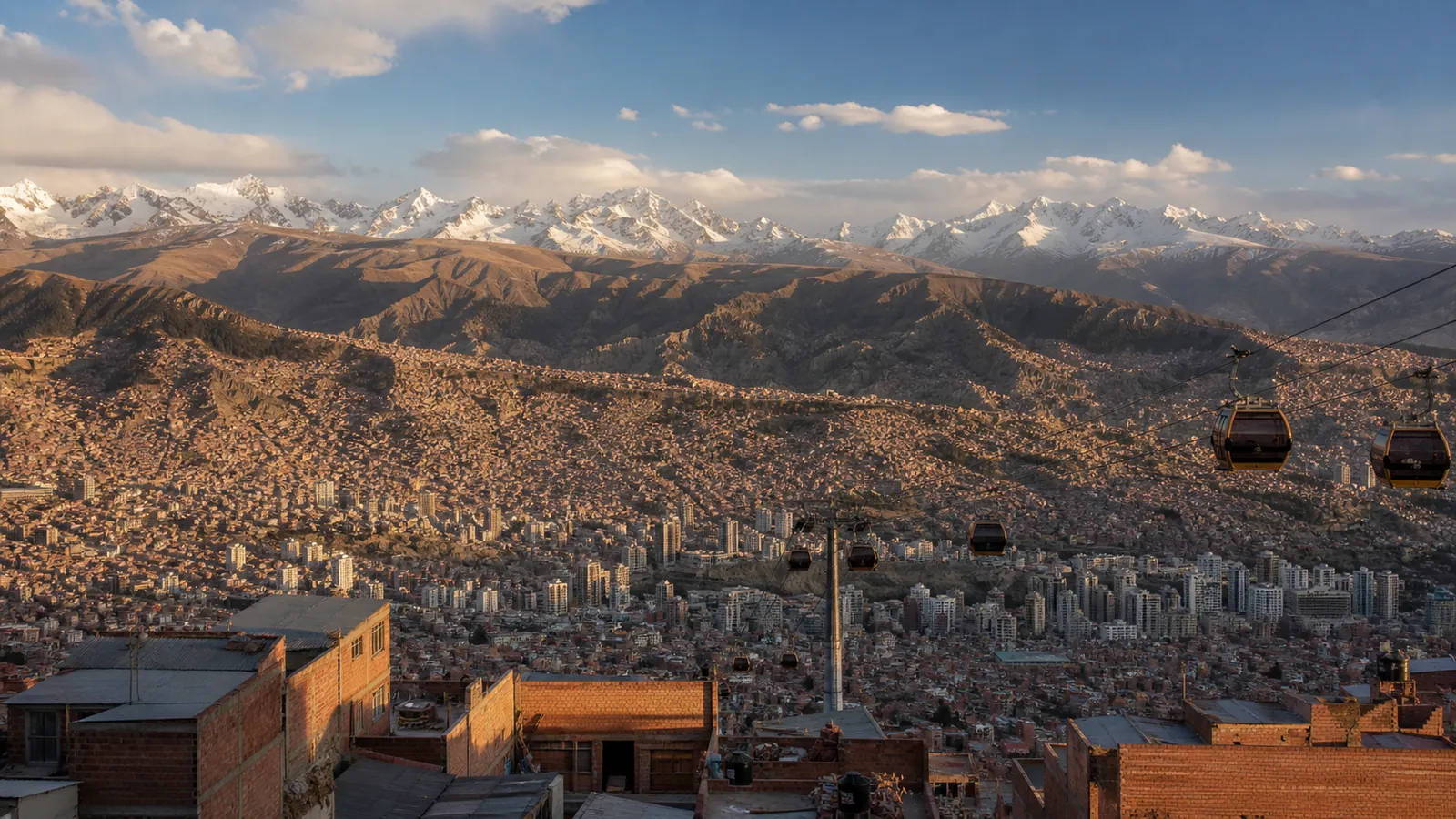
La Paz no se parece a ninguna ciudad: 3,650 m de altura, encajada en un cañón imposible, con teleféricos como transporte público y cultura aymara viva en cada esquina. Es la capital más alta, más rara y más barata de Sudamérica — y la puerta a Uyuni y el Titicaca.La Paz looks like nowhere else: 3,650 m up, wedged into an impossible canyon, with cable cars as public transit and living Aymara culture on every corner. It's South America's highest, strangest and cheapest capital — and the gateway to Uyuni and Lake Titicaca.
Mejor épocaBest time
Seco de mayo a octubre (mejor para Uyuni). La lluvia (nov–mar) complica los tours.Dry May–October (best for Uyuni). Rain (Nov–Mar) complicates tours.
PresupuestoBudget
Nómada cómodo ~$700–1,100 USD/mes; de lo más barato del continente.Comfortable nomad ~$700–1,100 USD/mo; among the continent's cheapest.
EntradaEntry
Sin visa 90 días para la mayoría (algunas nacionalidades pagan visa en frontera).Visa-free 90 days for most (some nationalities pay a visa on arrival).
ConectividadConnectivity
Internet irregular; a 3,650 m el mal de altura es real: llega y descansa.Patchy internet; at 3,650 m altitude sickness is real: arrive and rest.
ViajarTravel
Qué ver y reservar en La PazWhat to see and book in La Paz
Mi Teleférico
La red de teleféricos urbana más grande del mundo, por centavos.The world's largest urban cable-car network, for pennies.
Uyuni
El salar más grande del planeta, un espejo infinito; tour de 3 días.The planet's largest salt flat, an infinite mirror; a 3-day tour.
Death Road
Bajar en bici la 'carretera de la muerte' — leyenda para valientes.Biking down the 'death road' — legend for the brave.
Arma tu viajePlan your trip
¿Cuántos días te vas a La Paz?How many days in La Paz?
Dónde dormirWhere to stay
Hotel y estanciaHotel & stay
Hoteles en La PazHotels in La Paz
Booking
Estancias largas / departamentosLong stays / apartments
Booking
Reserva con cancelación gratis y paga al llegar.Book with free cancellation and pay on arrival.
Qué hacerWhat to do
Tours y experienciasTours & experiences
Tours en La PazTours in La Paz
GetYourGuide
Paquetes de varios díasMulti-day packages
TourRadar
Los tours y paquetes de varios días también son afiliados.Tours and multi-day packages are affiliate too.
eSIM
Datos al aterrizarData on landing
eSIM para BoliviaeSIM for Bolivia
Airalo
Se activa antes de salir; nada de buscar SIM en el aeropuerto.Activates before you leave; no airport SIM hunting.
SeguroInsurance
Elige según tu viajePick by trip type
SafetyWing
Larga estancia / nómadaLong stay / nomad
Heymondo
Viaje corto / turistaShort trip / tourist
IATI
En español / aventuraSpanish / adventure
Cobertura médica y de cancelación; barato y tranquiliza. Cada uno encaja con un viajero distinto.Medical and cancellation cover; cheap peace of mind. Each fits a different traveler.
VivirLive there
¿Y si te quedas una temporada?What if you stay a while?
Costo de vida nómadaNomad cost of living
¿Cuánto necesitas al mes en La Paz?How much do you need per month in La Paz?
La Paz es de las capitales más baratas de Sudamérica y funciona si tu prioridad es estirar el dinero mientras vives algo que no se parece a ningún otro lado. Pero pide aguante: unos 3.600 metros de altura que te tumban la primera semana, una economía con escasez de dólares y dos tipos de cambio, y bloqueos que paran la ciudad sin avisar. Ojo con las cifras: aquí todo se paga en bolivianos, así que lo que te cueste en dólares depende del tipo de cambio con el que pagues — las de abajo son aproximadas y conviene reconfirmarlas al llegar. Como base larga es dura y la escena nómada es casi inexistente; como escala de uno a tres meses es baratísima e inolvidable. Si tu trabajo vive de videollamadas impecables o necesitas comunidad nómada ya armada, esta no es tu ciudad.La Paz is one of the cheapest capitals in South America, and it works if your priority is stretching your money while living somewhere that feels like nowhere else. But it asks for grit: around 3,600 m of altitude that flattens you the first week, an economy with a dollar shortage and two exchange rates, and road blockades that shut the city down without warning. A caveat on the numbers: everything is paid in bolivianos, so what it costs you in dollars depends on the rate you pay at — the figures below are approximate and worth re-checking when you land. As a long-term base it's hard and the nomad scene is close to nonexistent; as a one-to-three-month stop it's dirt cheap and unforgettable. If your work depends on flawless video calls, or you need a ready-made nomad community, this isn't your city.
Austero al mesLean per month
≈US$650
Estudio o compartido, cocinas en casa, transporte público.Studio or shared, you cook at home, public transport.
Cómodo al mesComfortable per month
≈US$1.300
Departamento propio en buena zona, comes fuera, coworking.Your own place in a good area, eating out, coworking.
En qué se te vaWhere the money goes
- Renta de 1 recámara amueblada en zona cómoda (Sopocachi / San Miguel), mensualFurnished 1-bedroom in a comfortable area (Sopocachi / San Miguel), monthly≈US$250–450
- Renta de 1 recámara sin amueblar fuera del centro (Miraflores, Obrajes), mensualUnfurnished 1-bedroom outside the center (Miraflores, Obrajes), monthly≈US$150–280
- Internet de fibra en casa, mensualHome fiber internet, monthly≈US$25–50
- Coworking, mensualidad (día suelto ≈US$5–12)Coworking monthly pass (day pass ≈US$5–12)≈US$70–130
- Almuerzo / menú del día (sopa, plato fuerte y refresco)Set lunch / menú del día (soup, main, drink)≈US$2–4
- Cena en restaurante de gama media, una personaDinner at a mid-range restaurant, one person≈US$7–13
- Café de especialidadSpecialty coffee≈US$2–3
- Transporte mensual (minibús + teleférico, uso diario)Monthly transport (minibus + cable car, daily use)≈US$15–30
- SIM local con datos (Entel, Tigo o Viva), mensualLocal SIM with data (Entel, Tigo or Viva), monthly≈US$7–15
Internet y señalInternet & signal
Hay fibra real en las zonas donde vivirías (Sopocachi, Miraflores, Obrajes, Zona Sur) con Entel, Tigo y Cotel, la cooperativa telefónica paceña. Los planes domésticos se venden en el rango de decenas de megas —del orden de 50 a 200 Mbps de bajada según lo que contrates—, con subida bastante más baja porque casi todo es asimétrico; si tu trabajo depende de subir archivos pesados, revisa ese número y no el de bajada. Bolivia arrastra fama de tener internet caro y lento para el estándar sudamericano, y aunque la fibra mejoró mucho, la diferencia entre edificios es enorme: pregunta SIEMPRE qué proveedor y qué plan tiene el departamento antes de firmar, y haz tú mismo un test de velocidad dentro del depa. Cobertura móvil 4G sólida en toda la hoyada y en El Alto; el 5G apenas asoma en zonas puntuales y no cuentes con él. No hay apagones crónicos como en otros países, pero sí caídas puntuales, y en temporada de lluvias o durante bloqueos una reparación puede tardar días. Todo el que trabaja en línea aquí tiene un plan de datos móvil de respaldo — cópialo.There's real fiber in the areas you'd actually live in (Sopocachi, Miraflores, Obrajes, Zona Sur) through Entel, Tigo and Cotel, the local La Paz telephone cooperative. Home plans are sold in the tens of megabits — roughly 50–200 Mbps down depending on what you sign up for — with much lower upload, since almost everything is asymmetric; if your work depends on pushing big files, check that number, not the download one. Bolivia has a reputation for expensive, slow internet by South American standards, and while fiber improved things a lot, the gap between buildings is huge: ALWAYS ask which provider and plan the apartment has before signing, and run your own speed test inside the unit. Mobile 4G coverage is solid across the valley and in El Alto; 5G is barely present in a few spots — don't count on it. There are no chronic blackouts like in some countries, but there are one-off outages, and during the rainy season or a blockade a repair can take days. Everyone who works online here keeps a mobile data backup — do the same.
CoworkingCoworking
La escena es pequeña, de verdad pequeña: no esperes decenas de opciones como Medellín o Buenos Aires. Hay un puñado de espacios concentrados en Sopocachi y en la Zona Sur (San Miguel y Calacoto), muchos ligados a emprendimiento, impacto social o incubadoras, y suelen ser híbridos entre oficina compartida y sala de eventos. La mensualidad ronda ≈US$70–130 y el día suelto ≈US$5–12, con bastante variación según el espacio. Prefiero no darte nombres: abren y cierran con frecuencia y no quiero mandarte a una dirección muerta — búscalo en Google Maps una semana antes de llegar y escribe por WhatsApp, que es como se contesta todo aquí. En la práctica, mucha gente trabaja desde los cafés de especialidad de Sopocachi: el ambiente es bueno, pero el wifi es irregular y los enchufes escasean, así que no dependas de eso para una llamada importante.The scene is small — genuinely small. Don't expect dozens of options like Medellín or Buenos Aires. There's a handful of spaces clustered in Sopocachi and the Zona Sur (San Miguel and Calacoto), many tied to startups, social impact or incubators, and they tend to be half shared office, half event room. Monthly passes run ≈US$70–130 and a day pass ≈US$5–12, with a lot of variation between spaces. I'd rather not name specific spots: they open and close often and I don't want to send you to a dead address — check Google Maps a week before you arrive and message them on WhatsApp, which is how everything gets answered here. In practice a lot of people just work from Sopocachi's specialty coffee shops: nice atmosphere, but patchy wifi and few outlets, so don't stake an important call on it.
Dónde vive la gente nómadaWhere nomads actually live
Sopocachi es la respuesta corta: el barrio bohemio y de clase media de la ciudad, caminable, con cafés, restaurantes, bares, mercados y los pocos coworkings que hay. Es donde termina casi todo extranjero que se queda más de un mes. La Zona Sur (Calacoto, San Miguel, Achumani) está unos 300–500 metros más abajo, o sea más calor, más oxígeno y noches menos brutales; es la parte moderna y acomodada, con malls y buenos restaurantes, pero más cara, más dependiente del auto y algo estéril. Miraflores es el punto medio honesto: residencial, tranquilo, precios notablemente más bajos que Sopocachi y bien conectado por teleférico. Obrajes funciona si quieres el clima de la Zona Sur sin pagarlo, a medio camino entre ambas. El casco viejo y la zona de Sagárnaga/Rosario son baratos y llenos de vida, pero ruidosos, empinados y poco cómodos para vivir meses; y El Alto, aunque cuesta bastante menos, está por encima de los 4.000 metros, es frío y muy extendido — no te lo recomiendo como base.Sopocachi is the short answer: the city's bohemian, middle-class neighborhood, walkable, full of cafés, restaurants, bars, markets and the few coworking spaces that exist. It's where nearly every foreigner who stays more than a month ends up. The Zona Sur (Calacoto, San Miguel, Achumani) sits roughly 300–500 m lower, meaning warmer days, more oxygen and less brutal nights; it's the modern, affluent side with malls and good restaurants, but pricier, more car-dependent and a bit sterile. Miraflores is the honest middle ground: residential, quiet, noticeably cheaper than Sopocachi and well connected by cable car. Obrajes works if you want Zona Sur weather without paying for it, halfway between the two. The old town and the Sagárnaga/Rosario area are cheap and full of life, but loud, steep and not comfortable for months of living; and El Alto, though considerably cheaper, sits above 4,000 m, is cold and sprawling — I wouldn't use it as a base.
ComunidadCommunity
La comunidad extranjera existe pero es chica y no es de nómadas digitales: son cooperantes de ONG, gente de embajadas, misioneros y estudiantes de español. Eso significa poca infraestructura social ya armada — meetups escasos y esporádicos, sin el circuito de eventos nómadas de otras ciudades. Lo que sí funciona: los hostales del centro, las clases de baile y, sobre todo, los grupos de montaña, trekking y ciclismo, que aquí son religión (tienes el Huayna Potosí y el Illimani a la vista) y son la vía más rápida para conocer gente. Los grupos de Facebook y WhatsApp de extranjeros en La Paz sirven para vivienda y dudas prácticas. El español es obligatorio: fuera de hoteles y la Zona Sur casi nadie habla inglés, y en el día a día también vas a escuchar aymara. Si hablas español, la gente es cálida y hospitalaria aunque reservada al principio; si no lo hablas, te vas a sentir bastante solo.There is a foreign community, but it's small and it isn't a digital-nomad one: NGO workers, embassy people, missionaries and Spanish students. That means little ready-made social infrastructure — meetups are rare and sporadic, with none of the nomad event circuit other cities have. What does work: the downtown hostels, dance classes and, above all, the hiking, mountaineering and cycling groups, which are practically a religion here (Huayna Potosí and Illimani are right there) and the fastest way to meet people. Facebook and WhatsApp groups for foreigners in La Paz are useful for housing and practical questions. Spanish is non-negotiable: outside hotels and the Zona Sur almost nobody speaks English, and day to day you'll also hear Aymara. If you speak Spanish, people are warm and hospitable though reserved at first; if you don't, you'll feel pretty isolated.
Lo que nadie te diceWhat nobody tells you
La altura no es un detalle: alrededor de 3.600 metros en el centro de la ciudad (menos en la Zona Sur, más arriba en las laderas) y unos 4.050 en el aeropuerto de El Alto. Los primeros 3 a 10 días son dolor de cabeza, insomnio, falta de aire subiendo escaleras y cero rendimiento mental. No pongas entregas importantes en tu primera semana, no hagas ejercicio fuerte, toma mucha agua y ve suave con el alcohol. Si tienes tema cardíaco o pulmonar, o estás embarazada, consulta a un médico ANTES de comprar el vuelo. El dólar y el efectivo. Bolivia lleva años con escasez de dólares y una brecha entre el tipo de cambio oficial y el paralelo, y esa brecha se ha movido mucho —y rápido— con los vaivenes políticos y económicos recientes. Por eso cualquier cifra en USD de esta ficha es aproximada: según el tipo de cambio con el que termines pagando, lo mismo te puede salir bastante más barato o bastante más caro. Los cajeros no siempre tienen efectivo, muchos negocios son solo efectivo y las tarjetas extranjeras fallan más de lo que quisieras. Trae dólares en billetes nuevos y sin roturas, y verifica la situación cambiaria al llegar preguntando a gente que viva ahí — no te fíes de un artículo de hace seis meses, ni de este. Bloqueos y paros: son parte normal de la vida política boliviana y pueden cerrar carreteras, la ciudad entera o el acceso al aeropuerto durante días. Nunca compres un vuelo con margen justo y ten despensa en casa. Frío sin calefacción: no existe la calefacción central. De mayo a agosto las noches se acercan a 0 °C y los departamentos son heladeras. Pregunta la orientación del sol y si hay calefactor antes de firmar; es la diferencia entre disfrutar el invierno y sufrirlo. Lluvias de noviembre a marzo, con granizo, calles convertidas en ríos y riesgo real de deslizamientos en las laderas empinadas — pregunta por la ladera concreta antes de rentar ahí. Visado: la mayoría de nacionalidades entra con 30 días a la llegada, extendibles hasta un máximo de 90 días por año calendario. Eso limita de verdad una estadía larga y no existe visa de nómada digital. Los estadounidenses han necesitado históricamente una visa de pago (del orden de US$160, válida varios años), aunque las reglas para EE. UU. han estado en revisión últimamente. Confirma con el consulado boliviano antes de viajar, porque esto se mueve. Seguridad y renta: la ciudad es relativamente tranquila para la región, pero el riesgo clásico es el taxi falso y el secuestro exprés — usa radiotaxi o app y nunca pares un taxi en la calle de noche. Y ojo con el "anticrético", muy boliviano: te piden un depósito grande por adelantado en vez de renta mensual y te lo devuelven al salir; para una estadía corta no te conviene, quédate en alquiler normal o Airbnb.The altitude is not a footnote: around 3,600 m in the city center (lower in the Zona Sur, higher up the slopes) and about 4,050 m at El Alto airport. The first 3–10 days mean headaches, insomnia, no air climbing stairs and zero mental output. Don't schedule important deliverables for your first week, skip hard exercise, drink a lot of water and go easy on alcohol. If you have a heart or lung condition, or you're pregnant, talk to a doctor BEFORE booking the flight. Dollars and cash. Bolivia has spent years with a dollar shortage and a gap between the official and parallel exchange rates, and that gap has moved a lot — and fast — with recent political and economic swings. So every USD figure on this page is approximate: depending on the rate you end up paying at, the same thing can feel considerably cheaper or considerably more expensive. ATMs don't always have cash, plenty of businesses are cash-only, and foreign cards fail more often than you'd like. Bring crisp, untorn US dollars, and check the currency situation when you land by asking people who live there — don't trust a six-month-old article, or this one. Blockades and strikes: a normal part of Bolivian political life, and they can close highways, the whole city or the airport road for days. Never book a flight with a tight margin, and keep food at home. Cold with no heating: central heating doesn't exist. From May to August nights approach 0 °C and apartments are iceboxes. Ask which way the sun hits and whether there's a space heater before signing — it's the difference between enjoying winter and enduring it. Rainy season November to March, with hail, streets turned into rivers and a genuine landslide risk on the steep hillsides — ask about the specific slope before renting there. Visas: most nationalities get 30 days on arrival, extendable to a maximum of 90 days per calendar year. That genuinely caps a long stay, and there's no digital nomad visa. US citizens have historically needed a paid visa (on the order of US$160, valid several years), though the rules for the US have been under review recently. Confirm with a Bolivian consulate before you travel — this moves. Safety and rentals: the city is relatively calm by regional standards, but the classic risk is the fake taxi and express kidnapping — use a radio taxi or an app, and never flag a street taxi at night. Also watch out for "anticrético", a very Bolivian setup where the landlord takes a large lump sum up front instead of monthly rent and returns it when you leave; it's a bad fit for a short stay, so stick to a normal lease or Airbnb.
Cifras en dólares y aproximadas, revisadas en septiembre de 2026, para una persona sola. Los precios de renta se mueven rápido en las ciudades con muchos nómadas — úsalas para comparar y presupuestar, no como cotización.Figures in US dollars and approximate, reviewed in September 2026, for one person. Rents move fast in nomad-heavy cities — use these to compare and budget, not as a quote.
Dónde poner tu base en La Paz, por barrio:Where to base yourself in La Paz, by neighborhood:
Sopocachi
Céntrico, cafés y vida cultural: la mejor base.Central, cafes and cultural life: the best base.
Zona Sur
Más baja y templada, moderna y acomodada; se respira mejor.Lower and milder, modern and upscale; easier to breathe.
Centro
Mercados, la Witches' Market y el bullicio paceño.Markets, the Witches' Market and full paceño bustle.
Para quedarteTo settle in
Dinero y conexiónMoney & connection
Wise
Cuenta y tarjeta multidivisaMulti-currency account & card
VPN
Wifi público y geobloqueoPublic wifi & geoblocking
SafetyWing
Seguro de larga estanciaLong-stay insurance
Lo básico si te quedas meses: cuenta multidivisa, VPN y seguro de larga estancia.The basics if you stay months: multi-currency account, VPN and long-stay insurance.
RequisitosRequirements
¿Qué necesitas para entrar?What do you need to enter?
Requisitos de entradaEntry requirements
¿Necesitas visa?Do you need a visa?
Cargando…Loading…
¿Vas por más que turismo? Vías para Bolivia:Going for more than tourism? Routes for Bolivia:
Requisitos, tiempos, costo y fuente oficial de cada una.Requirements, timelines, cost and official source for each.
Referencia orientativa; las reglas cambian. Confirma siempre con la embajada o tu aerolínea antes de viajar.Guidance only; rules change. Always confirm with the embassy or your airline before traveling.
- Pasaporte: vigente al menos 6 meses después de tu viaje.Passport: valid at least 6 months beyond your trip.
- Visa: depende de tu nacionalidad y del tiempo de estancia. Revisa el caso de Bolivia en la página de requisitos.Visa: depends on your nationality and length of stay. Check the Bolivia case on the requirements page.
- Seguro: algunos países lo piden en frontera; te dejamos uno arriba.Insurance: some countries require it at the border; there's one above.
Algunos enlaces son de afiliado: si reservas por ellos, ganamos una comisión sin costo extra para ti. Solo recomendamos lo que usaríamos.Some links are affiliate links: if you book through them we earn a commission at no extra cost to you. We only recommend what we'd use.
Más en BoliviaMore in Bolivia
Santa Cruz de la Sierra
Capital de estado/provinciaState/provincial capital
Cochabamba
Capital de estado/provinciaState/provincial capital
Sucre
Capital del paísNational capital
Oruro
Capital de estado/provinciaState/provincial capital
Tarija
Capital de estado/provinciaState/provincial capital
Potosí
Capital de estado/provinciaState/provincial capital